Alright, let’s cut to the chase—if you’ve ever taken a tight turn in a car and felt like you’re leaning so far you’re about to tip over, you’ve experienced body roll. It’s that wobbly, unsettling lean that makes your passenger grip the door handle so hard their knuckles turn white, and let’s be real, it’s not just uncomfortable—it can also mess with how your car handles, especially if you’re pushing it a little harder than normal. As a guy who’s been selling sway bars for years now (yeah, that’s me, straight from the supplier side), I get asked this question all the time: Can a sway bar actually reduce body roll? The short answer is yes, but there’s way more to it than just a quick “it works.” Let’s break this down like we’re chatting in my shop over a cold soda, no stuffy engineering jargon that’ll make your eyes glaze over. Sway Bar
First, let’s get one thing straight: body roll isn’t a flaw in your car’s suspension—it’s kind of a built-in feature. Think about it: when you turn left, the weight of your car shifts to the right side, right? That shift compresses the right suspension springs and extends the left ones, which makes the body lean. Without any control, that lean would be way more dramatic. Now, what’s a sway bar (or anti-roll bar, if you’ve heard that term before)? It’s a thick, curved metal bar that connects the left and right sides of your suspension—usually mounted to the frame or body in the middle, with links that hook onto the control arms on each side. On a stock car, it’s there to tie those two sides together so one side doesn’t move independently of the other, especially during a turn.
Wait, let’s do a quick, simple test to make this real. Ever jack up your car and push down hard on one front fender? The whole front end tilts, right? Now, imagine that same side is connected to the other side via that sway bar. When you push down on one side, the bar twists a little instead of letting that side move all by itself. That twist is what resists the lean. So when you take a turn, and the right side suspension compresses, the sway bar acts like a spring pulling the left side up (or resisting its tendency to extend), which evens out the weight shift and cuts down that lean. That’s the magic—no fancy stuff, just a metal bar using torque to fight the roll.
But here’s the thing most people don’t get: not all sway bars are created equal. I’ve seen so many customers come in saying they just slapped a “performance” sway bar on their car and still felt like they were tilting like a shipping container. Wait, no—stiffer sway bars (which is what most performance options are) do a better job resisting roll, but you can’t just crank it up to max and call it a day. If you put on a sway bar that’s way too stiff for your car, you’ll start noticing other issues: like if you hit a pothole and only one wheel goes down, that stiff bar will yank the other side up, which feels harsh and can even mess with traction. It’s a balance—we’re not here to eliminate roll entirely, we’re here to manage it so your car feels stable, not like it’s on a seesaw.
Let’s talk real-world examples, because that’s what matters. I had a customer last month—mid-2000s sedan, used it for daily driving but also autocross on weekends. He said his stock car felt like he was leaning so much in the autocross slaloms that he’d have to slow way down. We put on our mid-stiffness sway bar set (front and rear, not just one) and he texted me the next day saying he cut his lap time by 2 seconds and didn’t feel like he was going to launch into the next lane every time he turned. Another guy had a truck—he uses it for hauling trailers, and when he’d take the on-ramp to the highway with a loaded trailer, the body roll was so bad his side mirrors would flop around. A rear-only sway bar fix did the trick there, because most of that lean was coming from the back end with the extra weight.
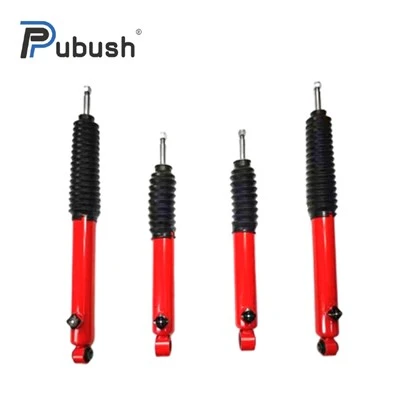
Now, let’s bust a common myth: some people think sway bars replace shocks or springs, but no way. Those three work together. Shocks control how fast the suspension moves, springs support the weight, and sway bars control the difference between left and right side movement during turns. If your shocks are shot, a sway bar can only do so much to fix that wobbly feel—you still need to replace the shocks too. Same with old, saggy springs. A sway bar is a complementary upgrade, not a magic bullet.
Here’s another thing: how it mounts matters a lot too. We’ve had customers who tried to install a cheap, no-name sway bar from a random online store and it rubbed against their control arms or rattled like crazy on rough roads. That’s because those cheap bars are made from thin metal that bends too easy, or the links are flimsy and pop off. Our sway bars are CNC-machined, use high-tensile steel that doesn’t twist under pressure, and come with polyurethane bushings (way more durable than stock rubber) so they don’t squeak or move around. We test every bar on our in-house rig—we hook it up to a hydraulic press and measure how much roll it resists before we ship it, so we know it works when our customers install it.
Wait, let’s get technical for just a second (I’ll keep it simple, I promise) to back this up. Engineers talk about roll stiffness, which is how much force it takes to roll the car 1 degree. A sway bar adds to the total roll stiffness—if your stock car has, say, 10,000 lb-ft per degree of roll stiffness, adding a stiffer sway bar can bump that up to 15,000 lb-ft per degree, which means you need way more force to make the car lean. That’s exactly what we want—less lean, more stable. But if you go too stiff, like 25,000 lb-ft, you’ll start coupling the wheels too much, so uneven road surfaces will make the car jerk side to side. That’s why we give sizing guides on our website—we ask for your car make, model, year, what you use it for (daily, track, hauling) and recommend the right stiffness, not just the “biggest” bar.
I also want to mention something about front vs rear sway bars. A lot of people only get a front one, but if you have a rear-wheel drive car, adding a rear sway bar can balance things out. Front only, you might end up with understeer (when the car won’t turn, it plows straight ahead) because the front is too stiff. Rear only, you get oversteer (when the back end slides out) if you turn too hard. That’s why our kits come with front and rear options, or standalone if you just need one. I had a Mustang owner come in last year—he’d done wheels and tires, but still had that loose back end. We added a rear sway bar, and he said his Mustang finally felt planted when he’d give it gas through a corner instead of fishtailing.
Let’s talk installation too—no, you don’t need to take your car to a fancy shop to put on a sway bar. Most of our bars come with step-by-step instructions that are even a beginner can follow, and we have a bunch of YouTube videos (I film them myself, so they’re not some corporate guy talking over your head) showing how to install them in your driveway. That said, if you’re not comfortable with wrenching, a local mechanic can do it in an hour or two, no problem. It’s a super accessible upgrade, not just for gearheads with lifts in their garages.
Now, let’s be honest—body roll can never be eliminated. Your car’s design is built to have some lean to it, because that’s what keeps the wheels in contact with the road. Remove all roll, and you’ll have a harsh, unstable ride over bumps. The goal is to reduce it enough so you feel in control, not like you’re on a roller coaster. A sway bar does that by targeting the weight shift during turns, which is exactly what causes that roll. I’ve had customers come back years later saying their sway bar was the best upgrade they ever did, way more than new floor mats or a sound system—because it makes every drive, even a quick trip to the store, way more comfortable and safe.
Wait, let’s wrap this up with a real quick story. A guy named Jake bought our economy sway bar set for his 2010 Camry, used it for his commute to work and occasional trips to the mountains. He told me he used to hate driving on twisty back roads because the lean made his coffee slosh all over the passenger seat. After installing the bar, he said he could take those same turns at 10 mph faster, no coffee spills, and his wife stopped complaining about feeling like she was going to fall out. That’s the stuff that makes this job worth it—knowing we’re not selling parts, we’re making drives better, safer, less stressful.
So, to circle back to the original question: Can a sway bar reduce body roll? Absolutely. But it’s not a one-size-fits-all part, and you need to get the right stiffness, install it correctly, and pair it with good shocks and springs to get the best results. As a sway bar supplier, we’re not here to push the most expensive bar—we’re here to help you find what works for your car and your driving style.
If you’re tired of that wobbly, unsettling lean when you turn, and you want to make your drive feel more planted, reach out to us. We can answer all your questions, help you pick the right sway bar for your ride, and make sure you get exactly what you need to stop dealing with that body roll. No pressure, no sales gimmicks—just real advice from people who actually work with these bars every day.
References
Panhard Rod Gillespie, T. D. (2021). Fundamentals of Vehicle Dynamics (2nd ed.). SAE International.
Milliken, W. F., & Milliken, D. L. (1995). Race Car Vehicle Dynamics. SAE International.
Pace, D. (2018). Suspension Geometry and Performance Tuning. Motorsport Technology Review, 11(2), 22-27.
Xingtai Refined Machinery and Auto Accessory Co., Ltd.
Xingtai Refined Machinery and Auto Accessory Co., Ltd. is one of the most professional sway bar manufacturers and suppliers in China, featured by quality products and low price. Please rest assured to wholesale durable sway bar made in China here from our factory. Customized orders are welcome.
Address: XINGTAI REFINED MACHINERY AND AUTO ACCESSORY CO., LTD507 NORTH TAIHANG ROAD, XINGTAI CITY, HEBEI PROVINCE, PR.
E-mail: lindy@rfauto.biz
WebSite: https://www.pubush-suspension.com/
