As a seasoned provider of compact substations, I’ve witnessed firsthand the transformative impact of modular design in this field. Modular design has revolutionized the way we approach the construction, installation, and operation of compact substations. In this blog, I’ll delve into the key modular design features of compact substations and explain why they matter in today’s energy landscape. Compact Substation

1. Standardized Modules for Easy Assembly
One of the most significant advantages of modular design in compact substations is the use of standardized modules. These modules are pre – fabricated in a controlled factory environment, ensuring high – quality production. For example, the transformer module, switchgear module, and control module are all built to specific standards. This standardization allows for easy assembly on – site. When a customer orders a compact substation, our team can quickly combine these pre – made modules, reducing the installation time significantly.
In a traditional substation construction, the on – site assembly can take weeks or even months. However, with modular design, we can complete the installation of a compact substation in a matter of days. This not only saves time but also reduces labor costs. The standardized nature of the modules also means that they are interchangeable. If a particular module malfunctions, we can easily replace it with a new one, minimizing downtime and ensuring continuous power supply.
2. Scalability
Compact substations with modular design offer excellent scalability. As the power demand of a particular area grows, additional modules can be added to the existing substation. For instance, if a small industrial park initially has a low – power requirement, a basic compact substation with a single transformer module and a simple switchgear module can be installed. But as the park expands and more industries move in, we can add more transformer modules to increase the power capacity.
This scalability is a huge advantage for our customers. They don’t have to invest in a large – scale substation from the start, which can be costly. Instead, they can start small and gradually expand as their needs change. This flexibility allows for more efficient use of resources and better cost management.
3. Space – Saving Design
Space is often a precious commodity, especially in urban areas. Compact substations are designed to be space – efficient, and the modular design further enhances this feature. Each module is designed to fit together in a compact manner, minimizing the overall footprint of the substation.
For example, the switchgear module can be designed to be vertically stacked, which takes up less floor space compared to a traditional horizontally – arranged switchgear. The modular design also allows for more efficient use of the internal space within the substation. We can arrange the modules in a way that optimizes the flow of power and reduces the length of cables, which in turn reduces power losses.
4. Flexibility in Configuration
Modular design provides a high degree of flexibility in configuring a compact substation. Depending on the specific requirements of the customer, we can mix and match different modules. For example, if a customer needs a substation for a residential area, we can configure it with a transformer module that is suitable for low – voltage distribution, along with a control module that can monitor and manage the power supply to individual households.
On the other hand, for an industrial application, we can include a high – capacity transformer module and a more advanced switchgear module with features such as fault protection and load management. This flexibility allows us to tailor the substation to the unique needs of each customer, ensuring optimal performance and efficiency.
5. Enhanced Safety
Safety is a top priority in the design of compact substations. The modular design contributes to enhanced safety in several ways. First, the pre – fabricated modules are tested thoroughly in the factory before being shipped to the site. This ensures that each module meets strict safety standards.
Second, the modular design allows for better isolation of different components. For example, the transformer module can be separated from the switchgear module, reducing the risk of fire or explosion spreading from one component to another. In addition, the control module can be designed to have built – in safety features such as over – current protection and short – circuit protection. These features help to prevent electrical accidents and protect the equipment and personnel.
6. Ease of Maintenance
Maintenance is an important aspect of ensuring the long – term performance of a compact substation. The modular design makes maintenance much easier. Since each module is a self – contained unit, it can be easily accessed and serviced. For example, if there is a problem with the transformer module, our maintenance team can simply isolate that module and perform the necessary repairs without having to shut down the entire substation.
This reduces the impact on the power supply and minimizes the disruption to the customers. Additionally, the standardized design of the modules means that spare parts are readily available, which further simplifies the maintenance process.
7. Environmental Friendliness
In today’s world, environmental considerations are crucial. Compact substations with modular design are more environmentally friendly compared to traditional substations. The pre – fabrication process in the factory reduces waste and energy consumption during construction. The use of high – efficiency transformers and other components in the modules also helps to reduce power losses, which in turn reduces the overall energy consumption.
Furthermore, the modular design allows for easy upgrading of components as new, more energy – efficient technologies become available. This means that the substation can be kept up – to – date with the latest environmental standards over its lifetime.
Conclusion
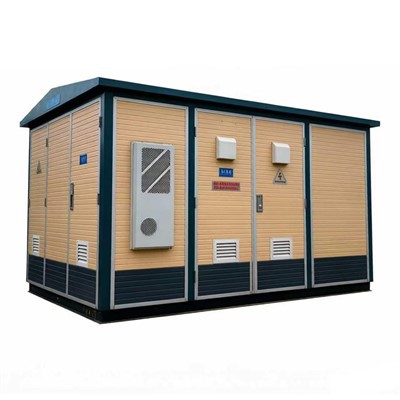
The modular design features of compact substations offer numerous benefits, including easy assembly, scalability, space – saving, flexibility in configuration, enhanced safety, ease of maintenance, and environmental friendliness. These features make compact substations an ideal choice for a wide range of applications, from residential areas to industrial complexes.
Compact Substation If you’re in the market for a compact substation, I encourage you to consider the advantages of modular design. Our team of experts is ready to work with you to design and install a substation that meets your specific needs. Whether you’re looking to upgrade an existing substation or build a new one from scratch, we have the experience and expertise to deliver a high – quality solution. Contact us to start a conversation about your compact substation requirements and let’s find the best solution together.
References
- "Handbook of Electrical Substation Design" by John D. McDonald
- "Power System Engineering" by Alexander Kusko
- "Substation Engineering: Design and Application" by A. P. Sakis Meliopoulos
Anhui Xinchen Electrical Equipment Co., Ltd.
We are one of the most reliable compact substation manufacturers and suppliers in China, specialized in providing high quality customized products. We warmly welcome you to buy bulk compact substation for sale here from our factory. Contact us for quotation.
Address: No. 8, Waihuan South Road, Economic and Technical Development Zone, Ningguo City, Xuancheng City, Anhui Province
E-mail: xinchen0316@126.com
WebSite: https://www.cn-xinchen.com/
