If you’ve ever held a sleek, weather-resistant boat hull, a durable truck body panel, or even a polished bathroom vanity top, chances are it started as a high-quality FRP mold. As someone who’s been supplying FRP molds to manufacturers across automotive, marine, and construction sectors for over a decade, I’ve learned that a mold isn’t just a physical tool—it’s the foundation of every FRP part that rolls off the line. A mold that’s made with the wrong skills will crack, warp, or produce inconsistent parts within months, costing you time, money, and reputation. Over the years, I’ve worked with dozens of mold makers, trained new team members, and helped clients troubleshoot failed molds, and I can tell you this: the key skills for FRP mold making aren’t just technical—they’re a mix of hands-on craftsmanship, industry knowledge, and problem-solving that you can’t learn from a textbook alone. Let’s break down what really matters. FRP Mold

First, and most non-negotiable, is master-level knowledge of composite material chemistry and curing processes. You might think “I make molds, not parts” is a valid line, but it’s a costly mistake. Let me explain: when we build an FRP mold, we’re not just laying fiberglass and resin on a surface—we’re designing a tool that will react to the exact chemicals used to make the final part. For example, if a client is manufacturing parts using epoxy resin, their mold can’t be made with polyester resin, because the two chemistries react at high temperatures during curing. Epoxy’s cure cycle runs at 120°F to 180°F, so a polyester mold would soften, distort, and leave a permanent impression of itself on the part. I’ve seen this happen firsthand early in my career—we built a mold for a small marine parts client that was made with general-purpose polyester, and after three production runs, the mold warped so badly, every part had a ¼ inch bow. We had to start over, and it cost the client three weeks of lead time and us a lot of goodwill. That mistake taught me that mold makers need to know not just their own materials, but how every variable—resin type (polyester, epoxy, vinylester), filler content, catalyst ratios, cure temperature, and post-curing time—interacts with the mold. I always make sure my team can explain why we choose a specific resin system for a mold, not just what to mix. They have to understand exothermic reactions—when resin cures, it releases heat, and if that heat isn’t managed, the mold can develop internal stresses that lead to cracking down the line. For example, large molds like boat hull molds generate a lot of exothermic heat in the center of thick layups, so our team has to adjust layup schedules and use heat sinks to dissipate that heat. Without that knowledge, a mold maker is just laying fiberglass and resin, not building a reliable tool.
Next, precision surface machining and mold preparation skills. The surface of an FRP mold is everything—it’s what transfers its exact shape, texture, and finish to the part. Even a tiny imperfection—a scratch, a slight unevenness, or a gap in gel coat—will show up as a flaw on the final part. That’s why our mold makers spend hours on the surface of every mold, not just the layup. Let’s start with the master pattern, the original model we build the mold around. The pattern has to be machined to within ±0.005 inch of the client’s specifications. That’s not a typo—half a hair’s width of error, and the part won’t fit together. Once the pattern is machined, we spend weeks sanding it by hand, starting with 80-grit sandpaper and working our way up to 2000-grit, then polishing to a mirror finish. Then comes the release agent system, which is half the battle. I’ve seen a mold maker skip a step here because they thought it was trivial—one client had parts that stuck to the mold every other run, because the release agent wasn’t cured properly before layup. Our team uses a multi-step release process: first a wax coat, then a solvent-based release agent, then a layer of PVA (polyvinyl alcohol) film for good measure, depending on the resin system. They also have to know how to repair surface flaws, not just cover them up. If a gel coat has a small pinhole, the maker can’t just sand it and add more gel—they have to grind it out, fill it with matching gel coat, and cure it properly so the repair doesn’t shrink later. Precision here isn’t about having a fancy CNC machine (though that helps)—it’s about taking the time to check every inch of the surface, running test parts, and correcting small issues before the mold ever goes into production.
Third, structural design and load calculation expertise. An FRP mold has to hold up to a lot of stress: the pressure from vacuum bagging, the weight of the FRP layup, the heat and pressure during autoclave curing, and the repeated force of part removal. A mold that’s too flimsy will flex during production, leading to inconsistent part dimensions. One of our long-term clients is a manufacturer of agricultural equipment parts—they run their molds through 500 production runs a year, and their old mold would flex so much during vacuum forming, parts had to be rejected 15% of the time. We redesigned the mold’s core structure, adding internal ribs and calculating how much support was needed based on the mold’s size and production method, and now their rejection rate is under 2%. That’s why mold makers need to understand structural engineering, not just layup techniques. They have to calculate the tensile and compressive strength of the mold’s FRP layup, figure out where to add reinforcing ribs, core materials (like foam core or balsa wood), and inserts for mounting hardware, and account for thermal expansion. For example, when a mold is heated in an autoclave, it expands, and if it’s attached to a metal frame that expands at a different rate, the two can pull apart, leading to cracks. Our team uses compatible materials for mold frames, or designs expansion joints to compensate. They also have to understand how the mold will be used: is it for hand layup, spray-up, vacuum infusion, or autoclave processing? Each method has different load requirements. Vacuum infusion molds, for example, need stronger edges to hold the vacuum pressure, while autoclave molds need to withstand higher temperatures and pressure. If a mold maker just uses a standard layup for every project, they’ll end up with a mold that fails under load.
Then there’s problem-solving and attention to detail during fabrication. FRP mold making isn’t a linear process—you’ll run into surprises at every step. A CNC-machined pattern might have a slight warp, a gel coat might blister during curing, a layup might have a dry spot that weakens the mold. The best mold makers don’t just follow a checklist—they troubleshoot in real time. For example, last year we were building a large mold for a wind turbine blade component, and during the initial gel coat cure, we noticed small bubbles forming in the surface. Instead of sanding them down and moving on, our lead mold maker realized the shop’s humidity was too high that day (over 70%, which is too much for gel coat). He adjusted the shop’s dehumidifier, let the mold cure slower, and fixed the issue before it caused permanent damage. If he’d just covered up the bubbles, the mold would have failed during the first production run, and the client would have been out tens of thousands of dollars. Problem-solving also means knowing when to adjust a design. A client might come to us with a design for a mold that’s too thin for its size, and a good mold maker will speak up, explain the risks, and propose a modified design that works. I’ve had clients push back on our recommendations before, but every time we’ve stuck to our expertise, we’ve delivered a mold that lasts years, while the ones who cut corners have come back to us with broken molds.
Another key skill is knowledge of mold maintenance and repair. A great FRP mold isn’t just built well—it’s cared for well. Our team trains every client’s maintenance team on how to inspect molds after each run, how to clean them without scratching the surface, how to spot early signs of damage like small cracks or gel coat wear. We also offer repair services, and our mold makers can fix anything from a minor surface scratch to a structural crack that forms after hundreds of runs. For example, a truck parts client had a mold that developed a 2-inch crack at the corner after 300 runs. Instead of building a new mold, our team ground out the crack, added reinforcing layers of FRP, and then finished the surface to match the original, and the mold went another 400 runs without issue. Mold maintenance is important because even the best mold will wear over time, and knowing how to extend its life saves clients money and reduces downtime. That’s why we always include a maintenance manual with every mold we deliver—no mold supplier should just drop a mold off and disappear.
Wait, let’s not forget about regulatory and industry-specific standards. Different sectors have different requirements for FRP molds. For example, automotive molds have to meet ISO 9001 quality standards, and aerospace molds have to meet even stricter requirements for dimensional accuracy and consistency. Marine molds, used in boats, have to withstand UV exposure and saltwater, so our team uses UV-stabilized gel coats and adds extra protective layers to the mold’s outer surface. Construction molds for panels have to be fire-resistant, so we use specific resin systems that meet fire codes. If a mold maker doesn’t know these standards, they’ll deliver a mold that’s not compliant, leading to delays or rejected parts. I always make sure my team stays up to date on the latest standards in each sector we work in—we attend trade shows, take training courses, and work closely with clients to make sure every mold we build meets their specific regulatory needs.
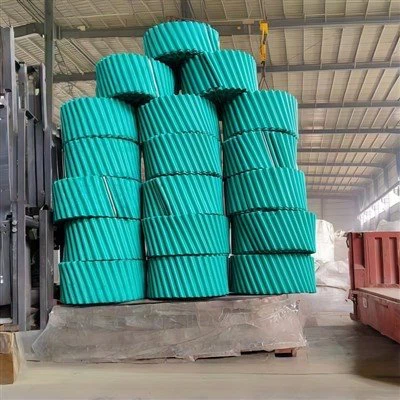
At the end of the day, FRP mold making is a craft that combines technical skill, experience, and attention to detail. I’ve been in this business for long enough to know that you can’t learn all these skills in a 6-month certification course—you have to build molds, troubleshoot mistakes, work with different materials, and understand how each part of the process affects the final product. As an FRP mold supplier, that’s what we bring to the table: not just molds, but the expertise to build tools that last, produce consistent parts, and save our clients time and money. If you’re in the market for a new FRP mold, or you have an old mold that’s not performing as it should, reach out to our team to discuss your project. We’ll walk through your needs, explain our process, and make sure you get a mold that meets your exact requirements.
FRP Environmental Equipment References:
- Composite Mold Making: A Practical Guide, Society of Plastics Engineers, 2019.
- FRP Mold Design and Manufacturing Standards, American Composites Manufacturers Association, 2021.
- Curing Processes for Fiber-Reinforced Polymer Molds, Journal of Composite Materials, Vol. 55, No. 12, 2022.
- Maintenance and Repair of FRP Production Molds, Composites Manufacturing Magazine, 2020.
Hebei Weihan Environmental Protection Equipment Co., Ltd.
We’re well-known as one of the leading FRP mold manufacturers and suppliers in China, featured by quality products and good service. Please rest assured to buy customized FRP mold at competitive price from our factory. Contact us for more details.
Address: No. 666 Chuangye Road, Zaoqiang County, Hengshui City, Hebei Province
E-mail: weihanmachine@gmail.com
WebSite: https://www.whanfrp.com/
