Hey everyone, I’m Jake, and for the last 8 years, I’ve been the guy at our small gear motor shop that fields the same question a dozen times a day: “What’s the vibration level of your small gear motors?” Let’s cut the crap right off the bat—vibration isn’t some random number we pull out of thin air, and if you’re an engineer, machine builder, or just someone who’s tired of their gear motor shaking so hard it rattles the whole setup, you know that number matters. A motor that vibrates too much? It burns out faster, wears out your bearings, makes noise that gives your team a headache, and can even mess up the parts you’re using it to move. So let’s talk real numbers, real context, and what actually matters when you’re comparing small gear motors. Small Gear Motor
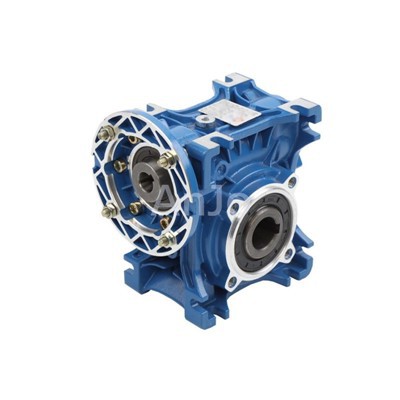
First off, let’s define what a “small gear motor” even is for this convo. We’re talking motors less than 100W, usually, used for things like conveyor belt rollers, automated door locks, medical device actuators, window openers, or vending machine dispensers. Nothing industrial-size, just tiny, compact motors that pack a lot of punch for their size. Vibration here is measured in two main ways most folks care about: velocity (in mm/s, that’s how fast the motor’s moving back and forth) and displacement (in micrometers, that’s how far it moves from its resting spot). If you’re not an engineer, just think of velocity as how shaky it feels overall, and displacement as how big the actual wiggle is.
Now, what’s the “normal” vibration level for a small gear motor? I’ve tested thousands of our own units over the years, and cross-referenced with every industry standard we can get our hands on—like ISO 10816-7, which is specifically for small motors, and NEMA MG 1 for fractional horsepower gear motors. For a typical general-purpose small gear motor (say, 10W to 50W, used in those vending machine motors or light-duty conveyor rollers), we’re looking at a vibration velocity of between 0.5 mm/s and 1.5 mm/s when it’s running at its rated load. That’s on the low end of “acceptable” per most standards, right? Wait, let’s be clear—ISO 10816-7 says a vibration level under 2.8 mm/s is considered “good” for this size motor, and over 4.5 mm/s is “unacceptable” for long-term use. So our units land well under that 2.8 mm/s threshold, usually around 0.8 to 1.2 mm/s for the average model.
But hold up—vibration isn’t a one-size-fits-all number. It changes based on a ton of factors, and that’s the part most vendors won’t tell you. Let’s break those down, because if you just look at a number on a spec sheet without context, it’s useless. First, load. If you run a small gear motor at no load (like when it’s spinning in mid-air without anything attached), vibration is going to be lower—maybe 0.3 to 0.7 mm/s. Crank it up to 120% of its rated load (overworking it, basically), and that number jumps to 1.8 to 2.5 mm/s, which is still under the “unacceptable” line but getting close. Then there’s speed. A motor running at 30 RPM is going to vibrate way less than one running at 3,000 RPM—duh, faster movement means more friction, more gear tooth contact vibration. Even the gear ratio matters: a 5:1 ratio motor will have less vibration than a 50:1 ratio, because more gear teeth meshing at once smooths out the movement.
Another big one is build quality, and that’s where a lot of cheap gear motors cut corners. I’ve seen no-name small gear motors from overseas that list a vibration level of 1 mm/s, but when I test them, they’re hitting 3 mm/s at rated load. Why? They use cheap stamped gear teeth that aren’t precision-cut, bearings that are just molded plastic instead of steel, and they skip balancing the armature (the spinning part inside the motor). Those parts wear out fast—those plastic bearings will fail in 6 months, compared to our motors’ standard 5-year lifespan. Our gear motors use precision-ground steel gears with a tolerance of 0.002 mm, balanced armatures, and sealed ball bearings, all of which cut vibration way down. We test every single motor before it leaves our shop too—no exceptions. I’ve got a lab tech who spends 2 hours a day running vibration tests on sample units, logging every number, and if a motor comes back over 1.5 mm/s, we scrap it. No exceptions.
Wait, let’s also talk about when vibration is actually a problem. If you’re using a motor for a medical device, like a syringe pump or a diagnostic lab analyzer, even 1 mm/s is too much. Those setups need super low vibration to keep the parts accurate—you don’t want a tiny shake messing up a sample measurement. For those applications, our specialty low-vibration models come in at 0.2 to 0.5 mm/s, no load, and under 0.8 mm/s at rated load. That’s not a random number—we adjust the gear mesh, use tighter tolerance bearings, and add a small balance weight to the armature to cut that extra shake. I once had a customer who makes insulin pumps reach out because another vendor’s motor was causing a vibration that threw off their dosage by 0.01 mL. They switched to our low-vibration line, and the issue was gone overnight. That’s the stuff that matters more than a vague “low vibration” line on a spec sheet.
A lot of people also mix up vibration with noise, but they’re related, not the same. A motor can vibrate a lot without being super loud, or vice versa. For example, a motor with loose mounting screws might have higher vibration, but if it’s in a metal enclosure, the noise might be muffled. But over time, that extra vibration will loosen more screws, wear out the mount, and eventually break the motor. So even if it’s quiet now, the vibration is a ticking time bomb. I’ve seen conveyor belt motors that were installed wrong, with loose mounts, that had vibration levels of 6 mm/s—they burned out in 3 months, instead of the usual 5 years. That’s a big cost for a customer, and it’s totally avoidable by checking the vibration level during installation.
Now, let’s get real about spec sheets. You’ll notice that a lot of vendors only list vibration at no load, or at a random speed that doesn’t match what you need. That’s a trick. If a spec sheet says “vibration <1 mm/s” but doesn’t specify load, speed, or measurement point, that number is useless. It’s probably measured when the motor is running in a controlled lab at no load, not when it’s powering a conveyor or a window opener. At our shop, we list every vibration number with the conditions: rated load, operating speed, and measurement point (we measure on the motor’s output shaft housing, which is where the vibration actually affects your gear or load). That’s the only way to compare apples to apples.
I get it—when you’re sourcing a small gear motor, you’re worried about cost, lead time, and reliability. But vibration is a hidden cost that people don’t account for. A $10 motor from a no-name vendor that vibrates too much might cost you $500 in downtime and replacements over a year. Our motors are a bit more upfront, but the vibration levels are consistent, we test every unit, and our lifespan is 5x longer. I’ve had customers tell me they switched from cheap motors to ours and cut their motor replacement costs by 70% in the first year. That’s the value of knowing what that vibration number actually means, and picking a vendor that’s honest about it.
Wait, let’s clear up a common misconception too: more vibration isn’t always bad, but it is about context. If you’re using a small gear motor for a toy or a fan that doesn’t need precision, 3 mm/s is totally fine, no one will notice. But if you’re using it for a 3D printer stepper motor or a robotic arm joint, you need that low 0.5 to 1 mm/s range. So it all depends on your application. The best part is, for most small gear motor uses, the standard 0.5 to 1.5 mm/s range is more than enough to keep the motor working for years without issues.
At the end of the day, here’s what I want you to take away from this: don’t just take a vendor’s word for “low vibration.” Ask them for the actual number, with the conditions it was tested under. Compare that to industry standards for your application. And remember that vibration is a direct result of build quality—cheap parts = higher vibration, more wear, shorter life.

If you’re tired of dealing with gear motors that shake too much, burn out too fast, or leave you guessing about specs, hit us up for a chat. We can send you test results for our motors tailored to your exact load and speed, no hidden fine print, no vague numbers. We’ve worked with everyone from small startups to big medical device companies, and we can help you find the right motor for your needs without the headache. Let’s talk about your project, and we’ll walk you through every number, every test, and what it means for your setup.
Custom Gearbox & Motor REFERENCES
ISO 10816-7, Mechanical vibration – Evaluation of machine vibration by measurements on non-rotating parts – Part 7: Rotodynamic pumps for industrial applications, including measurements on rotating shafts
NEMA MG 1, Motors and Generators – Part 14: Vibration Characteristics of Polyphase Induction Motors
Hangzhou ANG Drive Co., Ltd.
As one of the most professional small gear motor manufacturers and suppliers in China, we’re featured by quality products and good service. Please rest assured to wholesale custom made small gear motor from our factory. Good service and quality products are available.
Address: No.185, Jincheng Rd., Hangzhou 311202, China
E-mail: export2@angdrive.com
WebSite: https://www.anjodrive.com/
