If you’ve ever stood in a pharmacy aisle, a hospital supply closet, or even the back of an ambulance and wondered about the numbers on those thin, clear plastic bags tucked on shelves—you’re not alone. As someone who’s spent the last 12 years running a small, family-owned disposable urine bag supply business, I’ve heard every version of that question from nurses, clinic managers, travel tour leads, and even occasionally regular folks who picked up a bag at a gas station after a long drive where rest stops were scarce. Today, let’s break down the science, the reality, and the little details that no one talks about when it comes to the capacity of a typical disposable urine bag. Disposable Urine Bags
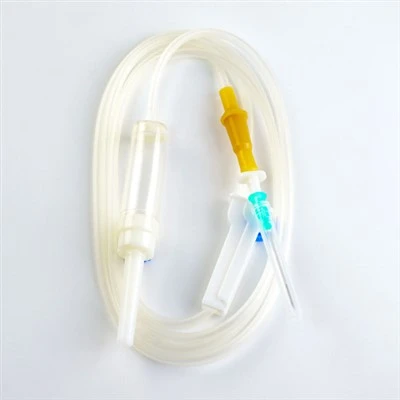
First, let’s get the basics out of the way. Disposable urine bags aren’t one-size-fits-all, no matter how generic “typical” sounds. Most people picture the standard bags used in hospitals for patients who can’t easily move to a bathroom: thin, flexible, with a tube to connect to a catheter, and a graduated scale printed on the side for nurses to measure output. Those are the ones we supply most of, and they’re also the closest to what you’d call a “typical” disposable urine bag.
Now, the big question: how much can they hold? Let’s start with the clinical standard, because that’s what most of the industry follows, including our operations. The vast majority of standard urinary drainage bags (that’s the official term for the hospital-style bags) have a maximum capacity of 2,000 milliliters. Wait, hold on—2,000 mL is about 67.6 fluid ounces, or roughly 2.1 quarts. For most people, that seems like a lot, and it is, but it makes sense when you think about the users. A patient who’s bedridden post-surgery, or someone with chronic urinary retention, might not be able to empty their bladder for hours, especially if they’re on IV fluids. A bag that only holds 500 mL would need changing every few hours, which means more staff time, more waste, and more chances of contamination.
But here’s where things get nuanced—because “typical” can shift depending on where the bag is used, and who’s using it. Let’s talk about the other common types of disposable urine bags, because not everyone needs a hospital-style drainage bag. There are leg bags, for example—smaller bags that attach to a strap around the leg, so patients can move around while using them. A typical leg bag has a capacity of 500 mL to 1,000 mL, and that makes sense: you don’t want a bulky, heavy bag swinging off your leg, and you need something you can easily empty when you’re sitting or lying down. Then there are the personal disposable urine bags, sometimes called travel urinals for emergencies, which are smaller still—usually 750 mL to 1,000 mL, designed for travelers, hikers, or people who might need to urinate in a pinch when there’s no bathroom available.
I’ve learned over the years that one of the biggest mistakes people make is assuming that the number printed on the bag is the amount you can safely fill it to. That’s a critical point. Every disposable urine bag has a maximum fill line, and that’s not just a random suggestion—it’s a safety standard. If you overfill a bag, two bad things happen: first, the plastic can stretch too thin, and leak, which is a huge problem in clinical settings (you don’t want urine spilling on a hospital floor or a patient’s bedding) or for travelers who might have to use a bag they can’t replace. Second, overfilling can cause backflow, which increases the risk of urinary tract infections (UTIs) for the person using the bag. That’s a big deal, and it’s why we make sure every bag we supply has clear, bold printed lines for “minimum,” “safe maximum,” and “do not exceed” on both the front and back—no one should have to guess.
Let’s back this up with some data, because as a supplier, we care about making sure our products meet health and safety standards, not just arbitrary sizes. According to the American Nurses Association (ANA), standard urinary drainage bags for acute care settings are required to have a minimum capacity of 1,500 mL, with most clinical models falling between 2,000 mL and 2,500 mL to accommodate extended use between staff rounds. The International Organization for Standardization (ISO) also has standards for disposable medical urinary collection devices, which specify that the nominal capacity (that’s the number listed on the packaging) must be accurate within a 5% margin of error. So if a bag is labeled 2,000 mL, it’s actually capable of holding between 1,900 and 2,100 mL, which is a tight, controlled range.
But wait, what about the disposable bags you might see for sale online for camping or emergency preparedness? Those are a different category, often called “collector bags,” and their capacities are smaller, usually between 750 mL and 1,200 mL. We supply both the clinical bags and the personal collector bags, and we make sure to clearly label each product with its intended use, so customers don’t accidentally buy a small camping bag for a hospital patient who needs a larger volume. I once had a clinic manager call me in a panic a few years back—they’d ordered what they thought were standard 2,000 mL bags, but the supplier had sent camping-style bags, and they ended up having to change bags three times overnight instead of once, which put extra strain on their staff. That’s the kind of mistake we work hard to prevent, which is why we’re transparent about capacity and use cases for every product we offer.
Another thing I’ve noticed over 12 years in this business: the demand for different capacities has shifted, especially post-pandemic. When hospitals were overwhelmed in 2020, they started ordering larger capacity drainage bags—some up to 2,500 mL—because staff were stretched thin and couldn’t check on patients as frequently. On the flip side, the travel and outdoor industry has grown, so we’ve expanded our line of personal disposable urine bags to include smaller, 750 mL models that are lightweight enough to fit in a purse or backpack, perfect for festival goers, hikers, or people with mobility issues who can’t easily walk long distances to a bathroom.
Let’s also talk about why the material matters for capacity. Disposable urine bags are made from thin, medical-grade plastic—usually polyethylene or polypropylene—that’s flexible but strong enough to hold the volume without leaking. A lower-quality plastic might stretch out as it fills, making the printed capacity line look misleading, or tear if it’s pressed against something. All our bags are made with 40-gauge medical-grade plastic, which is thicker than many generic brands, so you don’t have to worry about a bag bursting if it’s filled to the safe maximum line. We test every batch for leak resistance and capacity, and we keep records of every shipment, so our customers know they’re getting a reliable product every time.
I often get asked if there’s a “typical” capacity that works for everyone, and the answer is no—it depends entirely on the use case. For bedridden patients in a hospital, 2,000 mL is standard. For a patient walking around their home with a leg bag, 1,000 mL is ideal. For a hiker on a 10-mile trail, a 750 mL personal bag is enough, unless they’re a larger person or have a higher fluid intake, in which case 1,000 mL is better. That’s why we offer a range of capacities across our product line, so every customer can find what they need, instead of forcing them to settle for a one-size-fits-all option that doesn’t work for them.
It’s also worth noting that the capacity printed on a urine bag is a nominal measurement, not a precise one, for a good reason. The size of a bag’s tube, the shape of the top opening, and even the temperature can affect how much liquid it can hold without spilling. A bag filled with cold urine is slightly heavier and takes up more space than a bag filled with warm air, so our engineers build in a small buffer to account for that, which is why the safe maximum line is a few hundred milliliters below the nominal capacity. We’ve spent years refining that buffer based on feedback from nurses, clinic managers, and end users, and it’s one of the things that sets our products apart from cheaper, untested generic bags.
As someone who’s not just a supplier but also a former emergency medical technician (I worked in rural clinics before starting this business), I know how important it is to have reliable, correctly sized disposable urine bags. I’ve seen a patient miss an important IV appointment because the clinic ran out of the right size drainage bag, and I’ve had a hiker thank me for sending a bag that fit perfectly in their backpack when they were stranded on a trail for an extra two hours. Those moments stick with you, and they’re why we don’t cut corners on capacity, quality, or transparency when it comes to our products.
If you’re a hospital procurement manager, a clinic owner, a medical supply store buyer, or even someone looking for bulk orders for emergency preparedness or outdoor events, we have the disposable urine bags you need, in a range of capacities from 750 mL to 2,500 mL, all tested, compliant, and made to last for their intended use. We work with clients of all sizes, from small local clinics to large regional hospital networks, and we can tailor orders to your specific needs, whether that’s bulk shipments on a weekly schedule or one-time orders for a special event.

If you’re ready to talk more about capacity, pricing, minimum orders, or any other questions you have about our disposable urine bags, we’re here to help. Just reach out to our team to start the conversation, and we’ll get you all the details you need to make the right choice for your patients or your needs.
Disposable Sterile Infusion Set References
- American Nurses Association. (2021). Clinical Practice Guidelines for Urinary Catheterization and Drainage.
- International Organization for Standardization. (2019). Medical Devices — Urinary Collection Devices — Requirements and Test Methods (ISO 8669:2019).
- National Association of Medical Supply Equipment. (2022). 2022 Report on Disposable Medical Device Capacity and Safety Standards.
- World Health Organization. (2020). Guidelines for the Prevention of Catheter-Associated Urinary Tract Infections in Acute Care Facilities.
Shandong Zhushi Pharmaceutical Group Co., Ltd.
Shandong Zhushi Pharmaceutical Group Co., Ltd. is one of the most reliable disposable urine bags manufacturers and suppliers in China, featured by quality products and good price. Welcome to wholesale CE approved disposable urine bags made in China here from our factory. Contact us for customized service and pricelist.
Address: No 6th food and drug industry park economic and technological development zone, shan county 274300 Heze, Shandong PEOPLE’S REPUBLIC OF CHINA
E-mail: admin@cnzhushigroup.cn
WebSite: https://www.zhushimed.com/
