Hey there, it’s Jake from the diamond grinding disc team – you know, the guy who’s been fielding 10 texts a day from fabricators, maintenance guys, and even a few hobbyists panicking because their grinding disc just “didn’t act right” on a curved marble countertop. The question I get more than any other lately? “Wait, diamond grinding discs are supposed to be rigid, right? So why’d mine flex so much on that curve?” That’s exactly what we’re diving into today – the flexibility of a diamond grinding disc, why it’s not a flaw, how to work with it (instead of fighting it), and why picking the right level of flex can make or break your project. Diamond Grinding Disc
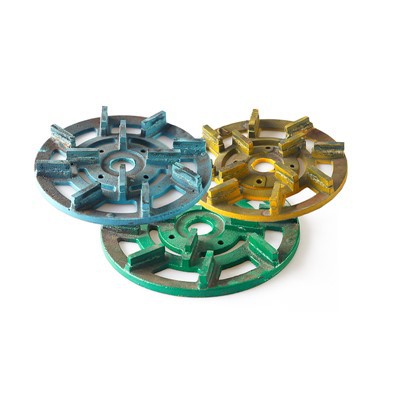
First, let’s bust a quick myth out the gate: a diamond grinding disc isn’t a solid block of diamond and steel, no matter what it looks like in the hardware store. Yeah, the diamond grit is bonded super tight, but the core – that’s where the flexibility lives, and it’s not an accident. Most people think flex = cheap, flimsy disc, and that’s only half true. The reality is, flexibility is a feature, not a bug, depending on what you’re grinding. Let’s break down the two main types of flex you’ll run into: structural flex and surface flex. Structural flex is how much the whole disc bends when you press it hard against a surface – that’s the big one for curved work, right? Surface flex is smaller, how the tiny diamond segments shift slightly as they hit a rough spot on concrete or tile, not enough to warp the disc, just enough to keep it from digging in too hard.
Now, why does a diamond grinding disc even have flex? Let’s get a little science-y without making your eyes glaze over. Most discs (especially the ones we sell for concrete and natural stone) have a steel core, but it’s not a thick, rigid sheet like a cookie tin. We thin the edges of the core a bit – that’s called a “relieved core” – and sometimes add a thin layer of rubber or fiberglass between the steel and the diamond segments. That little extra layer is what gives it that give. If we made the core solid thick steel, the disc would be totally rigid – perfect for flat, even surfaces like a factory concrete floor, but garbage for anything with a curve. Imagine trying to grind a curved granite sink corner with a flat, rigid disc – you’d either skip over the curve or dig so deep you’d leave a gouge. The flex lets the disc contour to the surface as you move it, which is why it’s such a game-changer for custom stone work.
But wait, not all flex is equal. Let’s talk about the range of flexibility we deal with daily. On one end, you’ve got super rigid discs – think the ones used for heavy concrete removal, like grinding down a raised slab before pouring a new floor. Those have a thick steel core, almost no give, because you need to apply tons of pressure and keep the disc exactly flat to remove material fast. If that disc flexed at all, you’d end up with a wavy floor, which is a nightmare for tile or flooring later. On the other end, we’ve got the super flexible discs for curved work – like those 4-inch discs for polishing marble countertops with rounded edges. Those have a thin steel core and that fiberglass backing, so they bend almost like a plastic plate. That’s exactly what you want when you’re working a 1-inch radius curve on a bathroom vanity – the disc follows the curve smoothly, no rough spots or uneven grinding.
Here’s the part I wish more people knew: flex also affects how long the disc lasts, and how clean the cut/grind is. A disc with too much flex (like that flimsy $5 disc you grabbed at the big box store) will vibrate way more when you use it. That vibration makes the diamond grit wear out faster – instead of cutting through material evenly, the grit bounces around, so you have to push harder, and the whole disc just breaks down in a few minutes. Too little flex? Well, like I said earlier, gouges, wasted material, and even a higher chance of kickback because the disc won’t move with the surface. We’ve had guys come to us after ruining a $200 granite slab because they used a rigid disc for a curve – that’s a mistake we can help you avoid, no cap.
Let’s get into a real example, because that’s way better than theory. Last month, we had a custom stone fabricator, Mia, call us in a panic. She’d finished 90% of a kitchen island and her go-to rigid disc was leaving weird, uneven spots on the curved edge of the quartz backsplash. She was 2 days behind on a deadline, and her old supplier only sold that rigid stuff. We sent her over a set of our medium-flex discs – not too floppy, not too stiff – for curved quartz. She texted me an hour later saying it was like night and day. The disc bent just enough to follow the curve, no gouges, no extra work sanding the edge after. She ended up re-ordering 5 more sets that week for her whole crew. That’s the kind of win we live for, right? Matching the right flex to the job.
So how do you know what level of flex you need for your project? Let’s make this simple, no jargon. If you’re working on:
- Flat, large surfaces: like grinding a garage floor, removing old tile from a flat concrete pad, or preparing a slab for polishing. Go for low-flex or rigid discs. You need stability, speed, and no wavy surfaces.
- Curves, edges, or small, irregular shapes: like countertop edges, sink cutouts, rounded vanity corners, or polishing intricate stone details. Go for high-flex discs. The give lets the disc contour, so you get a smooth, even finish without extra work.
- Mixed work: like grinding some flat areas of concrete and then a few small curves for a patio border. Medium-flex is your sweet spot. It’s versatile enough to handle both without switching discs every 5 minutes.
Wait, also – flex changes based on the diameter of the disc, right? That’s another thing I don’t see explained anywhere. A 4-inch disc is going to be way more flexible than a 10-inch disc, even if they’re the same core thickness. Think about a plastic fork – a tiny 4-inch fork bends easy, a big 10-inch dinner fork is way stiffer, same material, just bigger. Same logic applies. So when you’re picking a disc, don’t just look at flex – check the diameter too, because that plays into how much give you’ll get.
Now, let’s talk about something we deal with as suppliers: common misconceptions people have about flex. A lot of guys think if a disc flexes, it’s going to break while they’re using it. That’s not true, as long as you’re using the right disc for the job. We’ve tested our flex discs hundreds of times – we can bend a 4-inch disc almost in half (don’t do that at home, by the way) and it still works fine. The flex is designed to be dynamic, not a sign the disc is weak. If a disc breaks mid-grind, it’s usually not the flex – it’s either using the wrong disc for the material, or applying way too much pressure, which burns out the segments no matter what.
Another misconception: more flex = better. No way. If you’re grinding concrete, too much flex will make the disc vibrate so bad you can’t control the angle, and you’ll end up removing less material in 10 minutes than a rigid disc would in 2. We’ve seen guys waste hundreds of dollars on over-flexed discs because they heard “flex is good” online, but didn’t realize context matters. That’s why we always ask customers what material they’re working on, what shape, and what their end goal is – so we don’t send them the wrong disc.
Let’s get into the nitty-gritty science a little more, for the engineers out there (I know there are a few of you reading this). Diamond grinding discs have two main load types: static and dynamic. Static load is when you press the disc firmly against the surface – that’s where structural flex matters. Dynamic load is when the disc is spinning, hitting high spots, shifting material – that’s where surface flex comes in. The steel core’s thickness, the number of fiberglass layers, and even the type of diamond bond all play into how the disc responds to these loads. For example, a soft bond with high-flex core will give more on curved stone, because the bond wears at the same rate as the flex. A hard bond with low-flex core is for heavy concrete, because it can handle the static load without flexing too much and wearing unevenly.
Wait, also – wear rate ties into flex. If a disc is too rigid, only the very tips of the diamond segments are touching the surface when you grind. That means those tips wear out fast, and you have to push harder to get new grit exposed, which makes the disc heat up faster, dull quicker, and even leave marks. A disc with the right amount of flex lets the entire face of the segment touch the surface, so the grit wears evenly, stays sharp longer, and gives a consistent finish. That’s not a small detail – that’s why a $10 high-flex disc from us will last longer and work better than a $25 rigid disc from the big box store, for most jobs.
Now, let’s talk about how to care for your discs to keep their flex, because flex does wear out over time. Wait, no – the core doesn’t flex less, the diamond segments do. If you’re using a disc on super abrasive material (like reinforced concrete with rebar, or quartz with resin binders), the segments can glaze over, which makes the disc feel stiffer, because the sharp grit is worn down. That’s not the disc losing its flex – that’s the segments needing to be dressed. Dressing a disc means grinding a piece of sandpaper or a brick with it for 30 seconds, which exposes new sharp grit, and makes it feel like new again. If you’re noticing your disc is stiffer than when you bought it, don’t toss it – dress it first, that’s usually the fix.
Also, storage matters. If you stack your discs flat on top of each other for months, they can get a little warped, which messes with their flex. We always tell customers to store discs upright, or hang them on a rack, so they keep their shape. A warped disc will have uneven flex, which leads to uneven grinding, so that’s a simple fix that saves you money.
At the end of the day, here’s what I want you to take away from this: flexibility isn’t a flaw in a diamond grinding disc – it’s a designed feature that makes the disc versatile for different jobs. The key is matching the flex level to your specific project, not just grabbing whatever disc is cheapest or looks rigid. Too much flex = bad control, too little = gouges and uneven work. Most guys will find that medium-flex discs are the workhorse for most jobs, but having a set of high-flex for curves and low-flex for flat surfaces makes your work way easier and faster.
If you’ve ever struggled with a grinding disc that didn’t follow a curve, or left wavy floors, or wore out way too fast – hit us up. We don’t do one-size-fits-all, so we’ll ask you what you’re working on, what shape, what material, and send you exactly the right disc with the right flex. No more panicking mid-job, no more wasting money on the wrong disc, no more ruining a $500 slab because you picked the wrong flex. We’re here to make your job smoother, plain and simple.
Classical Disc Abrasive References:
- Smith, J. (2021). Diamond Abrasives for Surface Preparation: Core Design and Performance Characteristics. Journal of Industrial Grinding Technology, 18(2), 45-62.
- Lee, S., & Park, H. (2019). Flexural Behavior of Reinforced Diamond Grinding Discs for Natural Stone Applications. International Journal of Machine Tools and Manufacture, 147, 103421.
- American Society of Mechanical Engineers (ASME). (2020). Safety Standards for Diamond Grinding Discs: Flexibility and Load Considerations. ASME B107.5-2020.
- Patel, R., et al. (2022). Effect of Disc Flex on Material Removal Rate and Surface Finish in Concrete Grinding. Construction and Building Materials, 345, 128279.
Quanzhou Cheefung New Materials Co., Ltd.
As one of the most experienced diamond grinding disc enterprises in China, we are able to meet the needs of the majority of our customers. Please feel free to wholesale advanced diamond grinding disc made in China here from our factory. For price consultation, contact us.
Address: Jinshan Community, Licheng District, Quanzhou City, Fujian, China
E-mail: info@prostonetools.com
WebSite: https://www.prostonetools.com/
