Hey folks, it’s Jake here from the checkweigher team – I’ve been getting this question nonstop lately, and honestly? It makes total sense. You’re wrapping up your packaging line, slapping those perfect printed labels on your snacks, meds, or small hardware parts, and suddenly you’re staring at your checkweigher like, “Wait, will this thing still work on labeled stuff?” Spoiler alert: it’s not a hard no – but there’s a whole lot of nuance here that I don’t think enough people are talking about. Let me break this down like I would chat with you over a coffee break (no stuffy jargon, I promise). CheckWeigher
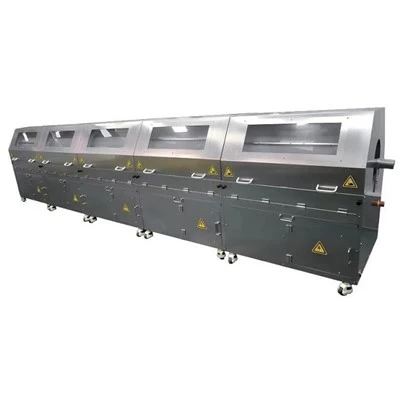
First, let’s cut to the basics of what a checkweigher actually does, just in case you’re new here. A checkweigher’s whole job is to measure the precise weight of every single product that moves through it, right? It flags any unit that’s too light (could be missing contents) or too heavy (overfilled, extra trash in there you don’t want) and kicks it off the line. Super important for compliance, cost control, and not ticking off regulators – think FDA, CE, whatever’s required for your industry. But here’s the thing: those printed labels? They’re not just a marketing afterthought – they’re a variable that can mess with the weight measurement if you don’t account for it.
Wait, let’s get specific about why labels matter. I’ve seen two common scenarios here. First, the label itself adds weight – duh, right? A paper label for a candy bar is like 0.1 grams, a shrink wrap label for a soda can is way more, maybe 1.5 grams. Second, the label can change how the product sits on the checkweigher’s conveyor, or even add static that throws the scale off. That’s where people run into problems – not because the checkweigher can’t handle labeled products, but because someone set it up wrong out the gate.
Let me give an example that stuck with me. A client of mine last year made protein bars – they were using a roll-fed label that wrapped 90% around each bar, and they were having way too many false rejects. Their checkweigher was set to target the “bare” product weight, like the bar without the label. But the label was adding that 0.25 grams, so when a bar was perfectly made, the total weight (bar + label) was 0.25 over their setpoint – boom, it got kicked, even though it was perfect. We fixed that in 5 minutes by adjusting the checkweigher’s target weight to include the average label weight, and suddenly their false rejects dropped by 80%. That’s the kind of simple tweak that trips people up.
Now, let’s talk about the edge cases where labels actually do cause issues, and how we solve ’em. One big one is static. If your labels are glossy, or you’re running them in a dry warehouse, they build up static charge on the conveyor. That static can make the product stick a little, or even pull it up just a tiny bit, which the checkweigher’s load cell (the part that measures weight) interprets as a weight change. We run static eliminators on all our checkweighers that handle labeled products now – it’s a $100 part that pays for itself in no time. I’ve seen a snack manufacturer go from 15% false rejects to 1% after adding a static bar – game changer.
Another issue: label placement. If a label hangs over the edge of the product, or if it’s wrinkled and bunches up on one side, that uneven weight distribution can throw off the measurement. Wait, but most modern checkweighers have what’s called “multi-point weighing” now, right? They don’t just measure one split second – they track the weight as the product moves across the conveyor, so a little uneven label isn’t going to throw the whole thing off. If you’re still using an old single-point checkweigher (we still see a lot of those in smaller facilities), that’s when label placement becomes a problem, and you might run into issues. But if you’re working with a current model, that’s not a big concern.
Here’s a myth I need to bust: some guys will tell you “labels add too much weight, so don’t use a checkweigher at all for labeled products.” That’s straight-up wrong. Let’s say you’re a pharmaceutical company, and your pills are in blister packs with labels. A blister label might be 0.3 grams, but your target product weight is 10 grams. That 3% variation is nothing – a good checkweigher can measure weight within 0.01 grams these days, so the label’s weight is a drop in the bucket. The key is to calibrate the machine with the actual finished product (label included) as your baseline, not the unlabeled product. That’s a mistake I see all the time from teams that don’t work with checkweighers daily – they skip the calibration step and wonder why it’s not working.
Wait, let’s dive into calibration a little more, because this is the make-or-break part. When you have a labeled product, you can’t just use the calibration weight (which is usually a blank piece of metal or plastic) and call it a day. You need to run 20-30 actual finished products, labels and all, through the checkweigher, get an average weight, set that as your target, and set your tolerance range based on that average. For example, if your average finished weight is 20 grams, you might set a tolerance of ±0.5 grams, which is perfect for most industries. If you try to use the unlabeled product’s average, you’ll miss those label weight differences, or get false rejects like my protein bar client did.
I also want to address a specific type of label: wet glue labels. Those are common on jars, right? The glue can seep a tiny bit, or the label might shift a little as it dries, which can change the total weight by a few milligrams. Again, nothing a good checkweigher can’t handle – you just need to run a few extra units through during calibration to account for that slight variation. We actually recommend that for any product with a wet-applied label, to make sure the tolerance range is wide enough to cover that shift, but not so wide that you miss underfilled units.
What about if you’re handling very small products? Like a pack of mints, each pack is 5 grams, and the label is 0.1 grams. That’s 2% of the total weight, so the checkweigher needs to be precise enough to pick up a 0.1 gram difference. Guess what? Our checkweighers can measure down to 0.005 grams, so that’s no problem at all. The trick here is not the checkweigher itself, it’s making sure the conveyor surface isn’t dirty – if there’s a crumb of old label stuck on the conveyor, that will throw off the small weight readings. That’s a maintenance thing, not a checkweigher flaw.
Let me throw a real-world case at you, because this is what happens when someone doesn’t plan for labels. A customer in the craft supply space was selling small bags of beads, each bag was 10 grams, label was 0.2 grams. They used an old checkweigher that could only measure to 0.1 grams, so they were having a lot of issues. We swapped them for a mid-range checkweigher that measures to 0.01 grams, recalibrated with the finished bags, and their accuracy went from 92% to 99.8% overnight. The labels didn’t break the machine – their old machine was just too basic and not calibrated right. That’s a common mix-up.
Now, is there any case where a checkweigher won’t work on labeled products? Let’s be honest here, no system is perfect. If your label is 10 grams and your product is only 8 grams, then the label is heavier than the product, so you’re basically weighing the label instead. But that’s an edge case – I’ve never seen anyone do that, because that’s bad packaging design. As long as your label is a small fraction of the total product weight, which is standard for almost every industry, a checkweigher works perfectly fine.
Another thing I get asked: can labels cause the product to bounce on the conveyor? Yeah, if the conveyor is old and has a lot of bumps. But that’s a conveyor issue, not a checkweigher issue. Most checkweighers work with standard conveyor systems now, with low-profile surfaces that keep products stable. If you’re using a brand-new labeling machine, your products should be coming off the labeler straight onto the checkweigher stable – no bouncing, no sliding, so weight readings are accurate.
Wait, let’s talk about compliance for a second. A lot of industries (food, pharma, cosmetics) have to have checkweighers in place to meet labeling requirements, right? They have to make sure the net weight is what’s printed on the label. If you skip accounting for the label’s weight, you could be off by a little, which might lead to a fine. That’s why getting this right isn’t just about reducing rejects – it’s about staying on the right side of regulations. We’ve had clients get audited, and when they calibrated for label weight, the auditors were totally fine with it, because that’s the actual finished product weight.
So, to sum this up: yes, a checkweigher can absolutely be used for products with printed labels. The key three things are: 1) Calibrate the checkweigher using the finished, labeled product as your baseline, not the bare product. 2) Add any necessary accessories like static eliminators or low-profile conveyors if your labels are causing issues. 3) Make sure your machine is precise enough for the total weight of your product plus label.
I’ve worked with hundreds of manufacturers, and I can count on one hand the times a checkweigher failed on a labeled product – and all of those were because of bad calibration, old equipment, or not accounting for static. We’re not talking about some futuristic, unproven tech here – checkweighers have been around for decades, and modern models are built to handle all kinds of packaging add-ons, including labels.
If you’re in the middle of setting up a new line, or you’re having issues with false rejects or missed underfilled products because of your labeled goods, let’s chat. I’m not here to sell you a $100,000 machine if a $500 accessory and a 10-minute calibration tweak will fix your problem. If you want to walk through your specific product, label type, and line setup, just reach out to our team – we’re happy to help you figure out if a checkweigher is the right fit, no sales pressure, no fluff. You’ve got enough on your plate without guessing whether your packaging equipment is going to work.
At the end of the day, labels are just part of the product, not a flaw that makes weight measurement impossible. A checkweigher is still one of the most reliable, cost-effective ways to make sure your products are the right weight, whether they have a fancy label on them or not. Stop letting labels be an afterthought in your equipment setup – build that calibration into your process, and you’ll wonder why you ever worried about it.
CheckWeigher References
- Checkweigher Basics: Understanding Load Cell Technology, Packaging World, 2022
- Static Control for Packaging Lines, Industrial Packaging Association, 2021
- Calibration Guidelines for Checkweighers, National Institute of Standards and Technology, 2020
- Accuracy Requirements for Labeled Food Products, FDA Food Safety Modernization Act, 2019
- Common Checkweigher Troubleshooting, Packaging Machinery Manufacturers Institute, 2021
Wenzhou Vitol Machinery Co., Ltd.
As one of the most professional checkweigher manufacturers and suppliers in China, we have world-leading production equipment and strong manufacturing capabilities. Please rest assured to buy customized checkweigher made in China here from our factory. Also, quotation is available.
Address: #16 Yongen Road, Longwan Area, WenZhou, Zhejiang, China
E-mail: leapeng01@gmail.com
WebSite: https://www.vitolsoftgel.com/
