Alright, let’s talk about something we get asked all the time here (we’re a repair clamp supplier, so yeah, this is our bread and butter but also a super common confusion) – are there actually repair clamps for high-temperature pipes? Repair Clamp
First off, if you’ve ever worked with industrial piping – think oil refineries, chemical plants, power plants, even some big food processing lines – you know high temp isn’t a “nice-to-have” detail. That pipe carrying molten steel? Or steam at 500°F? Or hot oil for a processing unit? A regular leak-stopping clamp you pick up at a hardware store? That’s gonna melt, crack, or fail before you even finish tightening the bolts. We’ve seen it happen way too many times – a shop tried using a standard clamp on their 450°F steam line, and by lunch, the seal was blown out all over the floor. Total nightmare, right?
So no, not all repair clamps work for high temps. But that’s the key: there are specific, engineered repair clamps made exclusively for that. Let’s break down why standard clamps suck at high heat, and what makes the good ones different.
First, let’s get the basics: what makes a pipe “high temp” for repair clamp purposes? We’re not talking a hot water line in your house that hits 120°F – that’s nothing. Industrial high-temp piping usually starts around 250°F, and can go up to 1,500°F or more, depending on the industry. That’s a huge range, so one clamp can’t cover all of it. A clamp for 300°F won’t touch 1,000°F, and vice versa. That’s why you can’t just grab any clamp off the shelf.
Now, why do standard clamps fail? Let’s list the big three mistakes people make with regular stuff on high temp:
- The gasket is garbage. Most standard repair clamps use EPDM or rubber gaskets – those max out around 250°F. Go above that, and the rubber turns into a sticky mess or crumbles. Some people try to beef it up with silicone, but even high-temp silicone only goes to like 400°F. For anything hotter, that’s a non-starter.
- The clamp body material is wrong. A regular cast iron or aluminum clamp? Aluminum starts softening around 400°F, cast iron can crack from thermal expansion at high temps. When the pipe heats up, it expands way more than the clamp does – so if the clamp is made of a material that doesn’t expand at the same rate (or worse, gets too soft), it can’t hold the gasket tight. That’s how leaks happen fast.
- No thermal expansion allowance. High temp pipes get hot, so they move – they expand lengthwise and change diameter. A standard clamp is rigid, doesn’t account for that movement, so eventually the bolts loosen or the clamp cracks from stress.
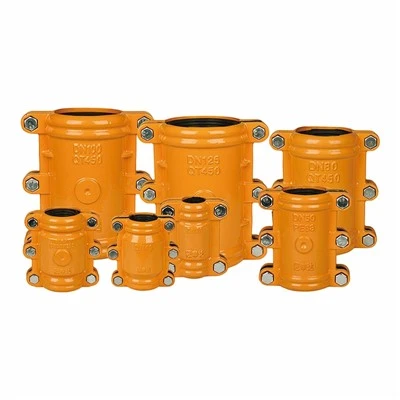
Now, the good high-temp repair clamps we supply (let’s be honest, this is our niche, so we know every detail) fix all those issues. Let’s go through what sets them apart:
First, the gasket. We use gaskets that are specifically formulated for high heat – usually graphite, flexible graphite, or even compressed asbestos-free (CAF) material that goes up to 1,800°F. Wait, graphite’s great, but we make sure to coat it with a high-temp sealant to stop it from seeping into the pipe’s fluid. For example, if it’s a food-grade high-temp line (yes, those exist for bakeries or large-scale pasta plants), we use food-grade flexible graphite gaskets that meet FDA standards. No weird chemicals leaching into your product, even at 500°F.
Second, the clamp body material. We don’t mess around here. For temps up to 800°F, we use ductile iron – it’s way stronger than cast iron, handles thermal expansion way better, and doesn’t crack as easy. For temps over 800°F, we switch to 304 or 316 stainless steel. Wait, 316 is better for corrosive high-temp stuff, right? Yeah, so if your pipe is carrying hot chemicals, 316 is non-negotiable. We also test every single batch of clamp bodies to make sure they hold up at the rated temp – no cutting corners here.
Third, expansion and movement. Our high-temp clamps are designed with adjustable bolt spacing and flexible end seals. Wait, no, more specifically – they’re split clamps (most repair clamps are split, but high-temp ones are machined to have a slight “give” when the pipe expands) and the gaskets are cut to follow the pipe’s movement. Also, we use high-temp lubricant on the bolts – regular anti-seize only goes to like 500°F, so we use one that works up to 1,200°F, so the bolts don’t seize up when the pipe is hot. That’s a small detail but it makes all the difference when you need to take the clamp off later for a inspection.
Wait, let’s give a real example we had last year. A power plant in Ohio called us – they had a 6-inch steam line leaking at a weld joint, and their old standard clamp blew out at 400°F when the steam hit it. They were panicking because shutting down the line cost them $10,000 an hour. We sent over our high-temp ductile iron repair clamp with flexible graphite gasket rated for 750°F. The installation took two techs 45 minutes (no hot work, which is another big win – repair clamps are a no-weld fix, so no need for permits or shutdowns sometimes). It’s still holding, 18 months later. That’s the kind of result we’re all about.
Now, wait a second – not all high-temp clamps are created equal. There are some cheap knockoff brands out there that say they’re high-temp but really just have a graphite gasket that’s not coated, so it seeps or falls apart after a few weeks. We test every single one we sell in our own lab – we heat clamps up to their rated temp, pressurize the pipe, check for leaks, make sure the bolts don’t loosen. We even send samples to customers who want to test them themselves before they order a bulk order. That’s how we build trust.
Also, don’t forget about pipe size and type. Our high-temp repair clamps work on steel pipes, cast iron pipes, even some stainless steel pipes. We have sizes from 2 inches up to 48 inches, so no matter what your pipe is, we have a clamp for it. For example, a refinery we work with in Texas has 36-inch pipes carrying hot crude oil at 600°F – we use our 316 stainless steel clamps with flexible graphite gaskets, and they’ve had zero leaks in two years.
Wait, another question people ask: can you use a high-temp repair clamp on a pipe that’s already under pressure? Most of the time, yes – our clamps are rated for working pressures up to 150 PSI for high-temp applications, which covers most industrial pipes. But we do have lower-pressure options for smaller lines too. The key is to tell us the exact details of your pipe: material, size, temp, pressure, what’s flowing through it. That way we can get you the right clamp, not one that’s close.
What about maintenance? Do high-temp clamps need special upkeep? A little, but nothing crazy. We tell customers to check the bolt torque every 6 months, especially if the pipe is cycling hot (like turning on and off a lot, which causes more expansion and contraction). That’s way easier than having to repair a leak and shut down the line. Also, if you see any rust or corrosion on the clamp body, a quick wipe with a high-temp paint is all it takes – no big deal.
Let’s circle back to the original question: are there repair clamps for high-temperature pipes? The short answer is YES – but only the ones that are engineered specifically for high heat, not your average hardware store clamp. The mistake so many people make is assuming all repair clamps work the same, but when you’re dealing with temps that can melt rubber or soften metal, cutting corners on the clamp can turn a small leak into a huge disaster.
Now, if you’re dealing with a high-temp pipe leak, or you just want to be prepared for future issues, don’t grab the first clamp you find. We make the clamps that are built for this – tested, rated, proven to work. We can help you figure out exactly what you need: send us the specs of your pipe, or if you’re not sure, our team will walk you through it. No pressure, no jargon, just real advice from people who work with these clamps every day.
We’ve fixed thousands of high-temp pipe issues over the years, and we’re not stopping anytime. If you need to buy, bulk order, or just have questions about which clamp is right for your job, hit us up to talk. We’re here to make sure your high-temp pipes stay leak-free, no stress, no mess.
Flange Repair Clamp References:
- Pipeline Repair Technology Association. (2022). Standard Specifications for High-Temperature Pipeline Repair Clamps.
- Industrial Materials Institute. (2021). Thermal Expansion Compatibility of Clamp Materials for High-Temp Piping Systems.
- Food and Drug Administration. (2020). Compliance Guidelines for Food-Grade Gaskets in High-Temp Industrial Piping.
- National Fire Protection Association. (2023). Guidelines for Hot-Work-Free Pipe Repair in Industrial Facilities.
- International Association of Plumbing and Mechanical Officials. (2022). Performance Ratings for High-Temp Repair Clamps for Municipal and Industrial Piping.
Fujian Fufa Valve Manufacturing Co., Ltd.
As one of the most professional repair clamp manufacturers and suppliers in China, we’re featured by quality products and good price. Please rest assured to buy durable repair clamp made in China here from our factory. Welcome to view our website for more information.
Address: Meilin Xikou Industrial Zone, Nan’an City, Quanzhou City, Fujian Province
E-mail: hongwenjin@fufafamen.cn
WebSite: https://www.fufavalve.com/
