Hey there! I’m a supplier of standard capacitive touch screens, and I often get asked if these screens are suitable for outdoor use. It’s a great question, and one that I’m more than happy to dive into. Standard Capacitive Touch Screen
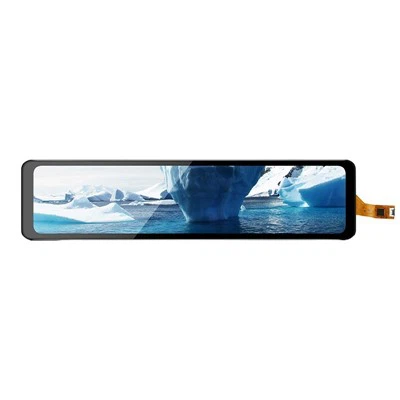
Let’s start with the basics. A standard capacitive touch screen works by detecting the electrical conductivity of your finger. When you touch the screen, it disrupts the electrostatic field, and the device figures out where you touched. This technology is super popular because it offers a really smooth and responsive touch experience. You’ve probably used it on your smartphone or tablet.
Now, when it comes to outdoor use, there are a few factors we need to consider. First off, sunlight is a biggie. You know how it can be really hard to see your phone screen on a bright sunny day? Well, the same goes for standard capacitive touch screens. The glare from the sun can make it almost impossible to read what’s on the screen. This is because the screen reflects a lot of the sunlight, and that reflection washes out the display.
But it’s not all bad news. There are some ways to deal with the glare. For example, we can use anti – glare coatings on the touch screen. These coatings help to reduce the amount of light that gets reflected, making the screen easier to see in bright sunlight. It’s not a perfect solution, but it does make a big difference.
Another issue with outdoor use is temperature. Standard capacitive touch screens can be a bit sensitive to temperature changes. In really cold weather, the touch sensitivity can decrease. This means that you might have to press a bit harder on the screen to get it to register your touch. On the other hand, in extremely hot weather, the screen might become less responsive or even malfunction. The materials in the screen expand and contract with temperature changes, and that can affect how well it works.
However, we’ve been working on improving the temperature resistance of our touch screens. We use special materials and manufacturing processes to make them more stable in different temperature conditions. So, while temperature can still be a challenge, our screens are getting better at handling it.
Moisture is also a concern when using touch screens outdoors. Rain, snow, or even just high humidity can cause problems. Capacitive touch screens rely on the electrical conductivity of your finger, and if there’s water on the screen, it can interfere with that conductivity. You might end up with false touches or the screen not responding at all.
To combat this, we’ve developed water – resistant touch screens. These screens have a special coating that repels water, so it beads up and rolls off the surface. This helps to keep the screen functioning properly even in wet conditions.
One of the advantages of using a standard capacitive touch screen outdoors is its multi – touch capability. You can use two or more fingers to perform gestures like pinching to zoom or swiping. This is really useful for applications like maps or photo viewing. It gives users a more intuitive and interactive experience compared to some other types of touch screens.
Now, let’s talk about durability. Outdoor environments can be tough on touch screens. They might get bumped, scratched, or exposed to dust. Standard capacitive touch screens are usually made with a layer of glass, which is quite strong. But it’s still possible to scratch or break the glass if it’s not properly protected.
We offer screens with tempered glass, which is much more resistant to scratches and breakage. And we can also add protective films to the screens to give them an extra layer of defense.
In terms of applications, there are many outdoor scenarios where standard capacitive touch screens can be used. For example, in kiosks at outdoor events, like music festivals or trade shows. People can use these kiosks to get information about the event, find maps, or purchase tickets. Another application is in outdoor digital signage. You can display ads, announcements, or other information on a touch – enabled screen, and people can interact with it.
So, is a standard capacitive touch screen suitable for outdoor use? The answer is yes, but with some caveats. It’s important to take into account the challenges like glare, temperature, moisture, and durability. But if you use the right solutions, like anti – glare coatings, improved temperature resistance, water – resistant coatings, and protective glass, then these touch screens can work really well outdoors.
If you’re in the market for a standard capacitive touch screen for an outdoor application, I’d love to have a chat with you. We can discuss your specific needs, and I can help you choose the right screen for your project. Whether you’re looking for a small screen for a handheld device or a large one for a digital signage display, we’ve got options.

Don’t hesitate to reach out if you have any questions or if you’re ready to start a procurement discussion. I’m here to make sure you get the best touch screen solution for your outdoor needs.
TFT LCD Touch Screen References:
- Capacitive Touch Screen Technology: Principles and Applications – A technical guide on how capacitive touch screens work and their various uses.
- Outdoor Display Technology Reports – Studies on the challenges and solutions for using touch screens in outdoor environments.
Shenzhen Mingqi Photoelectric Co., Ltd.
We’re well-known as one of the leading standard capacitive touch screen manufacturers and suppliers in China, featured by quality products and good price. Please rest assured to buy bulk customized standard capacitive touch screen from our factory. Welcome to view our website for more information.
Address: 3rd Floor, Building A, Fufang Science and Technology Park, Xintian Community, Fuhai Street, Baoan District, Shenzhen, Guangdong
E-mail: mingqisales@gmail.com
WebSite: https://www.mq-screen.com/
