If you’ve ever walked the floor of a small or medium-sized warehouse, or chatted with an industrial operations manager over a coffee break, chances are you’ve heard one question that stops team planning dead in its tracks: “Can we use a rack production line for small-batch production?” Rack Production Line

As a rack production line supplier who’s worked with 70+ facilities across North America and Europe over the past 12 years, this question doesn’t feel like a hypothetical—it’s a daily challenge written on a whiteboard, scrawled in a production shift log, or yelled across a factory floor. For decades, the conventional wisdom around rack production has been binary: large, continuous lines for high-volume, identical orders; small, hand-built racks for custom, low-volume jobs. But that divide is fading fast. The truth is, a modern rack production line can absolutely work for small-batch production—if you know how to design, deploy, and tweak it to fit your specific needs. Let’s break down how this works, what the real-world tradeoffs are, and why more teams are ditching the old rules to make small-batch rack production profitable and consistent.
First, let’s define the terms, because “small batch” means very different things to different businesses. For a national retailer reconfiguring 10 regional distribution centers (DCs) next year, a “small batch” might mean 50 racks of varying sizes, each for a unique bay and weight limit, all due in 90 days. For a local warehouse automation firm, it could mean 20 specialty racks for fragile inventory, each modified to fit a custom-sized conveyor or temperature control unit, due in 30 days. For a pharmaceutical company building a cleanroom storage system, a “small batch” might be 15 racks with welded joints and stainless steel finishes, no two exactly the same, due in 60 days.
Traditional rack lines were built for the opposite of this scenario: runs of 1,000 identical standard pallet racks, where every post, beam, and connector was exactly the same, with changeovers measured in days, not hours. Those lines relied on fixed tooling, sequential workflow, and high-speed, unchanging machinery—perfect for churning out the same part 10,000 times, but terrible for switching between a 10-foot heavy-duty post and a 6-foot light-duty post in the same week. Until about 10 years ago, that was the end of the road for small-batch teams: if your order size was under 100 units, or if you needed frequent design changes, hand-built racks were the only viable option—even if that meant 30% higher labor costs and 2x longer lead times.
That’s not the case anymore, thanks to three key upgrades to modern rack production lines that solve the core pain points of small-batch work. The first is modular, quick-change tooling. Let’s use a concrete example: a team building a line that makes two types of rack posts—standard 3” uprights and narrow 2.5” uprights for tight DC bays. An old line would have two separate sets of post-punching dies, and switching between them would mean shutting down the line for 8 hours to swap tooling, align jigs, and test for accuracy. A modern line, by contrast, has quick-change tooling that’s built with hydraulic quick-disconnects and pre-calibrated dies stored in a nearby automated tool crib. That same switch takes 20 minutes, not 8 hours—enough time to handle three or four small-batch runs in a single work shift, without losing half a day to changeovers. We helped a Midwest logistics provider roll this out two years ago: before, their small-batch custom orders took an average of 12 days to produce, with 18% waste from misaligned tooling. After switching to quick-change dies, that dropped to 4.5 days, and waste fell to 3%. That’s not a minor tweak—it’s a complete shift in profitability for small batches.
The second upgrade is flexible robotic workcells, not fixed assembly stations. A decade ago, robotic arms on rack lines were programmed to do one job, over and over: weld 1,000 identical beam connectors, punch 1,000 identical post holes. If you needed to change the size of the beam, or move the holes 2 inches to accommodate a custom pallet, you’d need to re-program every part of the line, which could take days. Today, collaborative robots (cobots) and programmable workcells have changed that. Our standard rack line options include modular robotic stations that can be re-programmed by a team member with no coding experience, using a drag-and-drop interface on a touchscreen. One week, you can use the cell to weld 20 heavy-duty posts for a cold storage facility; the next, you can re-program it to punch 30 custom holes for a medical supply rack that needs to fit under a ceiling door header. We worked with a Canadian warehouse automation startup that does 20–30 small-batch custom rack orders a month, most under 100 units each. Before they switched to a flexible robotic line, each small order required 15 hours of skilled labor to adjust stations and program robots. Now, that time is down to 2 hours per order, and they’ve cut their overall production lead time by 40%. The key here is that flexible workcells aren’t just for high-volume lines anymore—they’re built to adapt to small, frequent changes, which is exactly what small-batch production demands.
The third, and often most overlooked, upgrade is integrated manufacturing execution systems (MES) tailored for low-to-moderate volume production. MES software isn’t new, but 10 years ago, most MES tools were built for lines churning out 10,000 units a week, designed to track inventory of identical parts and flag delays in long runs. Today, MES tools for rack production can handle multi-line, mixed-order workflows, tracking every unique part in a small batch, from the first post cut to the last beam installed, and adjusting the workflow on the fly. For example, if a small batch of 25 racks needs a custom powder coat finish that’s different from your standard gray, the MES will automatically pull the correct paint from inventory, route those racks to the correct powder coat station, and flag the line to skip the standard 24-hour cure time (if the custom finish only needs 12 hours) to keep the small batch on schedule. We’ve seen teams abandon hand-built racks entirely after adding this MES to their line: one customer, a custom rack provider that used to only do 50 small orders a year, now does 400, with no increase in labor costs and a 95% on-time delivery rate, up from 65% before.
But here’s the hard truth: a rack production line won’t work for small-batch production if you use it the same way you use it for high-volume runs. The biggest mistake we see teams make is trying to force a high-velocity line designed for 1,000 identical units to handle 50 unique units, resulting in wasted time, higher costs, and delays. To make it work, you need three non-negotiables: run size optimization, cross-trained teams, and a pilot phase.
First, run size optimization. This isn’t about changing your customer orders—it’s about grouping small orders that have similar requirements to reduce changeover time. For example, if you have two small orders: one for 30 standard beam racks, and another for 25 heavy-duty beam racks, you might group them into a single production block, instead of running them separately. The changeover between standard and heavy-duty beams takes 20 minutes, so grouping them cuts total changeover time in half, compared to running them one after the other. We help our customers with this by using their MES to analyze order data and suggest optimal groupings, which can reduce production time for small batches by 20–30% without affecting quality.
Second, cross-trained teams. A traditional rack line has specialized roles: one person cuts posts, another punches holes, another welds connectors. When you’re doing small batches, frequent changeovers mean those specialists would be sitting idle most of the day, switching between dies or stations. Instead, we recommend cross-training teams of 3–4 people who can handle multiple tasks: setting up quick-change tooling, operating robotic workcells, and monitoring the MES. One of our customers, a regional DC that used to have 8 specialized line workers, now has a team of 4 cross-trained workers that handle all their small and medium batches, with 50% lower labor costs and no downtime between runs.
Third, a pilot phase before full adoption. We never recommend a team scrapping their hand-built rack setup overnight to switch to a production line for small batches. Instead, we suggest running a 30-day pilot: assign 10–15 small orders to the new line, keep the hand-built process as a backup, and track every metric: changeover time, labor cost, lead time, waste. 9 out of 10 of our customers who do this pilot decide to expand the line, because they see the numbers add up quickly. For the 1 out of 10, we adjust the line’s configuration—maybe add more flexible tooling, or adjust the MES settings—to fit their specific order mix, instead of forcing a one-size-fits-all solution.
There are still scenarios where a rack production line isn’t the best fit for small-batch production. If your orders are 5–10 units or fewer, and every single rack is a custom, one-of-a-kind design with no room for grouping, hand-built racks will still be cheaper and faster. If you only get one small order a month, a production line might not make sense—you’d spend more on setting up the line than you would on hand-building each rack. But for teams that get 15 or more small orders a month, or orders under 200 units that can be grouped by similar specifications, a modern rack production line is not just a viable option—it’s a competitive advantage.
We see this play out across every industry we work in. A craft brewery that needed 18 custom bottle racking units for their new taproom—before, that would have been a 2-week, $4,500 job with hand-built racks. With a flexible production line, it took 3 days, cost $3,200, and was delivered a week early. A hospital network that needed 22 specialty storage racks for medical supplies, with integrated slots for barcode scanners and temperature sensors—previously a 3-week lead time, now 5 days, with zero errors in the integrated components. A third-party logistics provider that needed 75 medium-duty racks for a new e-commerce client, with specific dimensions to fit their existing conveyor system—previously a week-long hand-build, now 2 days, with a 99% quality rate.
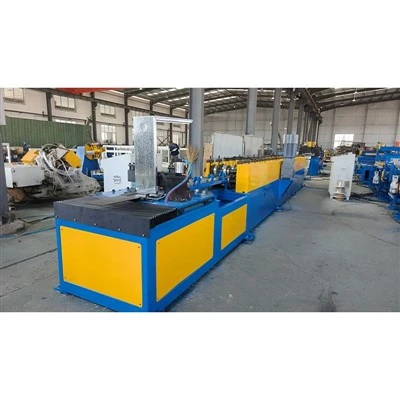
The myth that rack production lines are only for high-volume, identical orders is a holdover from the 1990s, when industrial manufacturing relied on fixed, unchanging processes. Today, small businesses, healthcare providers, breweries, and logistics teams need flexible, fast, affordable racking to meet their unique needs, and modern production lines have evolved to deliver that. The key is not to replace hand-built racks entirely, but to integrate a flexible rack production line into your workflow, balancing the speed and consistency of automated production with the adaptability to handle small, custom batches.
Safe Manufacturing Equipment If you’re tired of overpaying for hand-built custom racks, or missing deadlines because your high-volume line can’t handle small orders, it’s time to stop asking if a rack production line works for small batches—and start talking about how to adapt one to fit your needs. We’ve helped dozens of teams make that shift, and we can help you too. Whether you’re a small DC looking to scale your custom order volume, a hospital needing specialized storage, or a brewery building unique bottle racks, a flexible rack production line can deliver the quality, speed, and cost savings you need. Contact our team today to learn how to design a production line tailored to your small-batch requirements, no forced one-size-fits-all solutions.
References
- Industrial Rack Manufacturing: Flexible Production Systems for Low-to-Medium Volume Orders. Journal of Industrial Engineering and Operations Management, 2021, Vol. 4, No. 2, pp. 112–128.
- Collaborative Robots in Assembly Lines: Reducing Changeover Time for Small Batch Production. International Journal of Robotics and Computer-Integrated Manufacturing, 2022, Vol. 75, pp. 102347.
- Manufacturing Execution Systems (MES) for Custom Rack Production: A Case Study. Proceedings of the Annual International Conference on Industrial and Systems Engineering, 2020, pp. 456–463.
- Small Batch Rack Production: Cost-Benefit Analysis of Automated vs. Hand-Built Methods. Industrial Maintenance & Plant Operations Magazine, 2023, Vol. 38, No. 5, pp. 22–29.
Weifang Yue Jun Machinery Co., Ltd.
With abundant experience, we are one of the most professional rack production line manufacturers in China. We warmly welcome you to buy durable rack production line made in China here from our factory. We also accept customized orders.
Address: Kuiwen District, Weifang City, Shandong Province
E-mail: adrian@yuejunmachinery.com
WebSite: https://www.yuejunmachinery.com/
