Hey everyone! If you’ve ever dug into electrical work—whether you’re a newbie DIYer, a sparky, or just someone who cares about not blowing a kitchen circuit mid-bake—you’ve definitely heard of circuit breakers. But do you actually know how many types are out there, and why each one exists? Full transparency: I’m part of a circuit breaker supply crew, so I see the good, the bad, and the “wait, that’s the one I need” questions all the time. Let’s break this down like we’re geeking out over tools, not just parts. Circuit Breakers
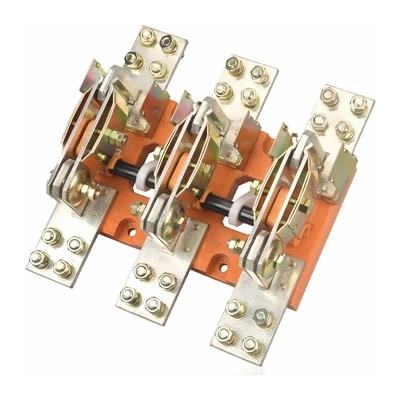
First off, let’s skip the textbook jargon overload. Circuit breakers aren’t just little switches that cut power when things go wrong—they’re tailored for exactly where they’re used, because a breaker for your bedroom’s lighting isn’t gonna cut it (pun so intended) for a 200-amp commercial machine or a whole-house solar setup. That’s why we stock so many different ones, and why you should know the difference before grabbing the wrong one.
Let’s start with the most common ones you’ll see in a standard home or small shop: standard thermal-magnetic breakers. These are the ones you’ll find in every basic residential panel, right? How they work is low-key clever, no fancy tech degree needed. The “thermal” part is a little metal strip that bends when it gets too hot—think of it like a paperclip warming up and curving. If there’s a slow overload (like running your toaster, microwave, and air fryer all on the same circuit), the strip bends enough to trip the breaker, cutting power before wires overheat. The “magnetic” part is an electromagnet that kicks in super fast—like, milliseconds fast—when there’s a short circuit, where hot and neutral wires touch and cause a huge surge. That’s why these are the go-to for most everyday spaces: they’re cheap, reliable, and easy to replace if someone flips ’em by accident mid-vac.
Wait, but thermal-magnetic aren’t one-size-fits-all. We also specialize in mini circuit breakers (MCBs) for tight spaces, like control panels for small machinery or RVs. These are smaller, rated for lower amperages (usually 1-60A) and are perfect when you don’t have a lot of room. A lot of our industrial clients love MCBs for their auxiliary control circuits, too—they can handle frequent trips without wearing out, which is a big deal for busy workshops.
Now, if you’ve ever dealt with a whole-house power surge after a storm, you’ve probably heard of GFCI and AFCI breakers. Let’s get these straight because people mix ’em up all the time. GFCI stands for Ground Fault Circuit Interrupter—you know those little outlets in bathrooms and kitchens that have a “test” and “reset” button? Well, we make GFCI breakers that replace the standard breaker in your main panel, so every outlet on that circuit is GFCI-protected, not just the ones you plug in. These detect tiny leaks of current to the ground (like if a hair dryer falls into a sink full of water) and trip in way less time than it takes to get a shock—super important for places near water. Then there’s AFCI, Arc Fault Circuit Interrupter, which is required in most new homes’ bedrooms and living rooms. Arcs are those little sparks that happen when wires are frayed or damaged, and they can start fires even if the current isn’t high enough to trip a standard breaker. AFCI breakers pick up on that specific arc signature and trip before the fire starts—game changer for home safety, honestly. We run GFCI and AFCI breakers through rigorous testing, too, because we don’t mess around with fire or shock hazards.
Moving on to heavy-duty stuff for commercial and industrial spaces: molded case circuit breakers (MCCBs). These are the big boys—they handle way higher amperages, from 100A up to like 2500A, so they’re for main service panels, large machinery, factory lines, you name it. The “molded case” is a tough plastic enclosure that protects the internal parts from dust, moisture, and physical damage—critical in places where conditions are rough (think construction sites, warehouses with heavy equipment). What’s cool about MCCBs is they’re adjustable, so you can set the trip threshold based on exactly what the circuit needs, not just a fixed number. We supply these for everything from office building service entrances to manufacturing lines, because they’re built to take daily heavy use without failing.
Then there’s the specialty crew. Let’s talk about residual current circuit breakers (RCCBs)—these are similar to GFCI, but they don’t have the overcurrent (amperage) protection that thermal-magnetic breakers do. So RCCBs only trip if there’s a ground fault, which makes them great for adding extra safety to circuits that already have proper overcurrent protection, like outdoor lighting circuits or temporary power at job sites. We also have low-voltage breakers for things like solar panel systems, EV chargers, and data centers—those need to handle DC power, which is totally different from the AC coming out of your wall, so you can’t just grab any breaker. I’ve seen people try that before, and let’s just say it ends with a blown breaker (and a frustrated customer, not to mention a headache for the electrician). We’ve got solar-specific breakers that are rated for the DC voltage from panels, so they trip correctly if there’s an issue with the system.
Wait, and don’t forget about residual current circuit breakers with overcurrent protection—known as RCBOs. These are basically RCCBs + MCBs in one, so they handle both ground faults and overcurrent. They’re super popular in European-style residential setups, but we ship them over too because a lot of our clients install systems that match international specs. For anyone dealing with mixed-use spaces, like a home with a home business that needs extra safety, RCBOs are a solid pick.
Now, a quick note on how we (as a supplier) make sure all these are good. We don’t sell knockoff breakers that skip safety standards—we test every batch, keep a huge inventory so you don’t have to wait weeks for a replacement, and can help you figure out exactly which type you need. If you’re a homeowner redoing your kitchen, you probably need AFCI/GFCI breakers. If you’re a builder wiring a new commercial warehouse, you’re looking at MCCBs and maybe RCCBs. If you’re an electrician working on an RV, MCBs are your jam. No guesswork, because we’ve got the expertise to walk you through it.
Let’s also talk about common mistakes we see customers make: grabbing a breaker with the wrong amperage. A 15A breaker for a 20A circuit? It’ll trip constantly, and you’ll end up bypassing it (bad news). A 25A breaker for a 20A circuit? It won’t trip when it’s supposed to, leading to overheated wires. We help people avoid that all the time—just shoot us the specs of your circuit, and we’ll point you to the right one.
Another thing: when to replace a breaker. If a breaker trips more than a few times without a real issue (like you’re not overloading the circuit), that’s a sign it’s worn out. Or if it feels warm to the touch when it’s not tripped—don’t ignore that, that’s a fire risk. We stock replacement breakers for every type we sell, so you don’t have to hunt around.
At the end of the day, circuit breakers are the unsung heroes of electrical safety. You don’t think about them until they trip, and then you realize how much you rely on them. The key is matching the right type to the right application, and that’s where we come in. Whether you’re a DIYer with a small project, an electrician on a big job, or a business owner needing to upgrade your commercial electrical system, we’ve got the breakers you need, at fair prices, and the know-how to help you pick the right one.

If you’re working on a project and aren’t sure which circuit breaker you need, or you just want to restock on reliable parts, hit us up to connect for purchasing and project guidance. We’re here to make this part of your job or home project easy, no stress.
Junction Box References:
- National Electrical Code (NEC) – Article 240: Overcurrent Protection
- Underwriters Laboratories (UL) Standard 489: Molded-Case Circuit Breakers, Circuit Breaker Modules, and Circuit Breaker Assemblies
- International Electrotechnical Commission (IEC) 60947-2: Low-voltage switchgear and controlgear – Part 2: Circuit breakers
- Occupational Safety and Health Administration (OSHA) Electrical Safety Standards – 29 CFR 1910.303
Zhejiang Leidun Electric Co., Ltd.
As one of the most experienced circuit breakers manufacturers and suppliers in China, we also support customized service and OEM service. Please feel free to wholesale high quality circuit breakers made in China here from our factory. Thank you for your interest in our products.
Address: No.337, Liule Road, Liushi Town, Yueqing City, Wenzhou City, Zhejiang Province, China
E-mail: Sales@zgleidun.com
WebSite: https://www.leidunelectric.com/
