Hey there, if you’re here because you’re tired of dealing with flimsy plastic stationery that cracks, fades, or breaks after a few uses—same. As someone who’s been in the plastic stationery parts game for over 8 years, I’ve tested thousands of components (think: pen barrels, stapler bodies, binder rings, eraser casings, you name it) and learned that quality testing isn’t just for big factories or fancy labs. It’s the difference between a customer coming back for repeat orders and ghosting you because their new stapler broke on day two. Today, I’m breaking down exactly how we test the quality of our plastic stationery parts—no stuffy jargon, just the real, actionable steps we use every single day. Plastic Stationery Parts

Let’s start with the basics: you can’t test plastic stationery without actually checking the material first. I see so many suppliers cut corners here, using cheap recycled plastic that’s brittle or low-grade virgin resin that melts too easily. First up, we always do a quick visual check before we even touch any tools. I’m talking about things like no warping—if a pen barrel looks like it was baked in a bad oven (not supposed to curve like that after molding), we toss it immediately. No sink marks, either—those little indentations on the inside of a binder ring or the bottom of a pencil grip? They’re not just cosmetic; they weaken the part and make it crack when you put pressure on it. We also check for flash (those extra thin plastic strips left over from the molding process) because even a tiny bit of flash on a stapler’s push arm can scratch paper mid-use or jam it. Oh, and color consistency? If you ordered 10,000 blue pen barrels and half of them are a weird teal, that’s a problem. We use a basic color meter (nothing fancy, just a cheap handheld tool that matches Pantone swatches) to make sure every batch lines up, and even the new guys on the team know to flag a batch that’s off.
Next, material integrity—this is where the real science kicks in, but we keep it simple. First, hardness testing. You might be thinking, “How hard is a plastic pen?” Well, if it’s too soft, it’ll bend when you’re writing a full page; too hard, and it’ll snap if you drop it. We use a Shore durometer (again, nothing super expensive) to test different parts. For example, pen barrels should be around Shore 70 to 85—enough give that they don’t dig into your finger when you’re writing, but stiff enough not to bend. Eraser casings? Those need to be a bit softer, around Shore 50 to 60, so they feel comfortable in your hand but don’t get all squishy after a month of use. We never skip this step because we once had a batch of stapler bodies that were Shore 95—they were so rigid, they broke when someone stapled 20 sheets of paper. Oops, that was a costly mistake, so now we do this on every single mold run.
Then there’s impact resistance, which is basically “will this part survive being dropped?” Stationery gets tossed in backpacks, dropped on desks, stepped on (hey, we’ve all done it), so if a pen barrel breaks when it falls from 3 feet, it’s useless. We test this by dropping parts from a standard height—usually 3 feet onto a hard concrete surface (not a carpet, that’s too soft). We do this 10 times per part, and if even one part breaks, the whole batch gets rejected. Last quarter, we had a new resin supplier send us some polypropylene (the stuff we use for most pen barrels) that was super brittle—half the pens broke after two drops. We caught it before it even left our warehouse, saved us a ton of returns, and had a long talk with that supplier (they’re out now, fyi). For heavier parts, like stapler bases, we might bump them a bit harder, since those get more wear. We also test for low-temperature resistance, because if someone in Canada buys our binders in January, they shouldn’t crack when they yank a ring open at -10°C. We put parts in a freezer for 24 hours, then do the same drop test—no cracks, no breaks, that’s our rule.
Wear and tear is another big one, because stationery gets used. Think about how many times you click a retractable pen—sometimes hundreds of times a day. If the click mechanism wears out after 1,000 clicks, that pen is useless. We have a little automated click tester (we built it ourselves, actually, for like $50) that clicks pens 10,000 times straight, and if the click stops working, the pen gets tossed. For staplers, we staple 5,000 sheets of paper (standard office paper, nothing fancy) and check if the arm still moves smoothly, if the staples feed evenly, and if the body has any cracks. We once had a batch of staple push rods that wore down after 3,000 staples, so the staples would jam halfway through—definitely not something we want our customers dealing with. For binder rings, we open and close them 1,000 times, and if they don’t lose their spring or get too loose to hold paper, they pass. We also test for UV resistance, because if a customer leaves a notebook on a windowsill for six months, the plastic cover shouldn’t fade or become brittle. We put parts in a UV chamber for 72 hours, then check color and flexibility—no fading, no brittleness, that’s good.
Functionality testing is non-negotiable, right? A pen that won’t write is just a plastic stick. We test all of our pen parts together, but individually, we make sure the barrels are the right diameter, the grip fits snugly, the clicker aligns with the ink cartridge. For erasers, we test how well they erase pencil marks—wait, that’s more about the eraser material, but the casing can get in the way if it’s too big or too small. For staplers, we make sure the base is wide enough so it doesn’t tip over when you staple, and the release button is easy to press even if your hands are a little greasy (we test that too, by the way—slippery hands are a thing). For things like plastic paper clips or binder tabs, we test how well they hold paper—binder tabs should stay on the page when you flip through a notebook, and paper clips shouldn’t slip off after a week. We also test for compatibility with other parts—like, if we make a custom binder ring for a client, we need to make sure it fits their existing binder covers without being too tight or too loose. We once had a client send us a new cover design, and the first batch of rings we made were too small—they wouldn’t fit, so we re-molded them for free, but that’s why we test compatibility with prototype parts before full production.
Environmental testing? It’s not just a buzzword, and our customers care about it. A lot of schools and offices now want stationery that’s safe, so we test for toxic chemicals. We use a third-party lab to check for things like lead, phthalates, and BPA—all that stuff you don’t want in a kid’s pencil or a office pen. We make sure every part meets the international safety standards, like EN71 for toys (wait, even though stationery isn’t a toy, if kids use it, we follow those standards too) and FDA approval for parts that might come into contact with food (like pencil grips for snack time, or erasers that get chewed—don’t pretend you haven’t chewed on an eraser as a kid). We also test for recyclability, because more and more customers want sustainable products. Our plastic parts are all made from recyclable polypropylene, so we test that they can be melted down and remolded without losing quality—no extra chemicals that mess up the recycling process.
Wait, I can’t forget about packaging testing, because that’s part of getting the part to the customer intact. If a box of pen barrels arrives at a customer’s warehouse half broken, all our testing is for nothing. We test how the parts hold up during shipping—we simulate shipping conditions by putting boxes on a vibration table (it shakes them like a truck driving down a bumpy road) for 2 hours, and then check for cracks, warping, or damage. We also test for stacking—if we stack 10 boxes on top of each other, the bottom boxes shouldn’t crush. If a part gets damaged in shipping, we adjust our packaging—maybe add more bubble wrap, or use sturdier boxes. Last year, a customer in Australia complained that some binder rings arrived bent, so we switched from thin cardboard boxes to corrugated ones with dividers, and that fixed the problem.
Here’s the thing: I know not every stationery supplier has access to all the fancy lab equipment. We’ve built most of our testers with cheap tools—freezer from the kitchen, old drill for the click tester, concrete slab in our warehouse. It’s not about spending thousands of dollars on gear; it’s about being thorough and understanding what your parts actually go through. We’ve had customers come to us with parts that failed a test we talked about, and they were shocked that we do all this testing in-house—they thought all suppliers just send parts off without checking.
At the end of the day, our goal is to make plastic stationery parts that our customers can rely on. Whether you’re a small stationery brand making custom pens, a big office supply company needing binder rings, or a school needing stapler parts for their classrooms, you don’t want to deal with returns because parts break or fade. If you’re tired of working with suppliers who cut corners and send you low-quality parts, hit us up to chat about your needs. We can share our test results, send prototype parts for you to test on your end, and make sure whatever you get from us is quality you can trust.
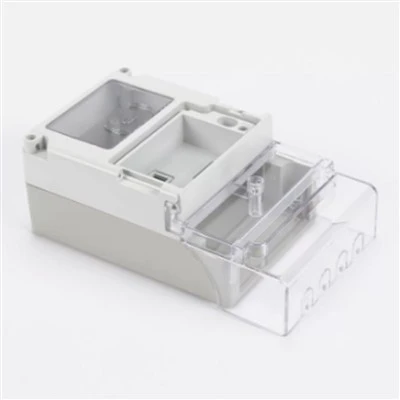
At the end of the day, testing plastic stationery parts isn’t complicated—it’s just paying attention to the details that make a part good. No fluff, no fancy jargon, just making sure every part we send out works as it should, from the first use to the last. If you’re a buyer looking for reliable plastic stationery parts, let’s connect and figure out how we can help.
Plastic Bathroom Accessories References:
ASTM D2240 – Standard Test Method for Rubber Property—Durometer Hardness
EN71-1:2014 – Safety of toys – Part 1: Mechanical and physical properties
FDA 21 CFR Part 177.1520 – Food contact materials: Polyolefin resins
ISO 179:2010 – Plastics—Determination of Charpy impact strength
Yongkang Shunjiang Plastic Products Co., Ltd.
As one of the most professional plastic stationery parts manufacturers and suppliers in China, we offer a wide range of products with superior quality. Please feel free to wholesale bulk customized plastic stationery parts from our factory. Also, pricelist is available.
Address: Kangzhuang Road, Xicheng Subdistrict, Yongkang City, Zhejiang Province, China
E-mail: 15158911623@163.com
WebSite: https://www.shunjiangplas.com/
